What the Bible Actually Says About Authority in the Church
- Michelle Hayman

- Jul 17, 2025
- 23 min read
The Roman Catholic Church maintains that the pope; the bishop of Rome; is the successor of the apostle Peter and the earthly head of the Church. This doctrine, known as apostolic succession, is tied to the claim that Jesus gave Peter unique authority over His Church, symbolized by the “keys of the kingdom of heaven” in Matthew 16:19, and that this authority has passed down through a line of Roman bishops beginning with Linus, whom Rome names as Peter’s immediate successor. Through this succession, the pope is said to exercise supreme, infallible authority over all Christians on earth.

Who Was Linus? A Closer Look at the Man Rome Calls the Second Pope
The Roman Catholic Church teaches that Linus was the first bishop of Rome after the apostle Peter and therefore the second pope in the line of apostolic succession. According to Catholic tradition, when Peter was martyred in Rome, he passed his spiritual authority; including the so-called “keys of the kingdom”; to Linus, who is said to have led the Church from roughly AD 67 to AD 76. This succession is treated not merely as historical, but as a theological necessity: for the papacy to claim an unbroken chain of spiritual authority, it must begin with Peter and continue immediately through Linus. Yet when we examine the biblical and historical record with honest scrutiny, we find that this narrative lacks support in both Scripture and early Christian practice.
Linus is only mentioned once in the entire New Testament. In 2 Timothy 4:21, Paul sends a final set of greetings: “Do thy diligence to come before winter. Eubulus greeteth thee, and Pudens, and Linus, and Claudia, and all the brethren.” That is the extent of what Scripture tells us about Linus. He was, evidently, a believer in Rome and a companion to others in the Christian community there, but Paul gives him no title, no honorific, no indication of ecclesial authority. He is not addressed as a bishop or pastor, nor is he singled out in any way as a leader of the Roman church. If Linus held any special office during Paul’s time, it would be strange for Paul to mention him so casually and without distinction; especially given Paul’s habit of naming and affirming leaders and elders in his letters.
Moreover, Paul’s epistle to the Romans, written around AD 57, contains an extensive list of greetings to key members of the Roman church. Yet Linus is not mentioned there at all. This silence is significant. If Linus were the successor to Peter and bishop over the Roman believers, it would be an extraordinary omission. Likewise, Peter himself; whose presence in Rome is not even confirmed by Scripture; never mentions Linus in either of his epistles. The Bible, in other words, knows Linus only as a name among many, not as a singular apostolic heir.
The first time Linus is described as Peter’s successor comes not from Scripture, but from second-century tradition. Around AD 180, the Church Father Irenaeus, in his work Against Heresies, writes that Peter and Paul, after founding the Roman Church, “committed into the hands of Linus the office of the episcopate.” Irenaeus identifies this Linus with the same individual mentioned by Paul in 2 Timothy. Later, Eusebius, the fourth-century historian, also repeats the idea that Linus was ordained by the apostles. But it must be emphasized that these statements arise more than a century after the alleged events. They reflect theological interest and later church structure; not first-hand testimony or apostolic command. And even if we take Irenaeus at his word, the fact that both Peter and Paul are said to have jointly founded the church in Rome undermines the idea of Peter as the singular head. If Peter was not the sole founder, he could not have been the first pope in the sense required by Roman Catholic doctrine.
Beyond the lack of biblical affirmation, the larger problem lies in what the early Church in Rome actually looked like. All available evidence suggests that the first-century Roman Christian community was not governed by a single bishop. Rather, it was led by a group of elders or presbyters. The model of a monarchical bishop; one man ruling over the church in a given city; did not emerge clearly until the middle of the second century. Even respected Catholic scholars, such as Francis A. Sullivan, have acknowledged that the idea of a singular bishop in Rome during the apostolic age is not historically supported. Instead, what we find is a fluid leadership structure in which multiple elders guided the church collectively, much like the model described in the book of Acts.
In the New Testament, Paul appoints elders in every city, not supreme bishops. Philippians 1:1 refers to “bishops and deacons” plural, indicating a shared model of leadership. Paul also gave Timothy and Titus instruction on the character and qualifications of elders, but never instructed them to install a singular successor to the apostles, nor did he suggest any model resembling the papacy. The early Church was driven by Spirit-led calling, scriptural faithfulness, and moral integrity; not institutional succession.
Furthermore, the idea that Peter transferred his authority to Linus lacks any scriptural basis. Peter never speaks of a successor. He does not confer authority on any individual in his letters, nor does he mention Rome as his seat of ministry. In fact, Galatians 2:7–9 makes clear that Peter’s mission was primarily to the Jews, while Paul was appointed as the apostle to the Gentiles. Given that Rome was the epicenter of the Gentile world, it is difficult to imagine why Peter would be regarded as its supreme spiritual authority, or why his supposed successor would be installed as bishop over a church Paul himself nurtured through instruction, letters, and visits.
Linus, then, may well have been a faithful believer in the early Roman church. He may have even been recognized as a leader in the years following the apostles. But to call him a pope in the modern sense is historically unjustified, biblically unfounded, and theologically problematic. The concept of papal succession from Peter to Linus is not rooted in the apostolic witness, but rather in a much later institutional theology, built to support the authority of an evolving ecclesiastical structure.
What emerges from Scripture is not a hierarchical chain of succession, but a Church ruled by Christ as its Head, governed by elders who meet the qualifications of faithfulness and character, and sustained by the power of the Holy Spirit working through the Word. Authority was never passed from Peter to Linus by divine command. Instead, the early Church honored those who labored in sound doctrine, lived in holiness, and shepherded the flock; not those who claimed offices based on inherited position.
In short, Linus may have served the Church. But he did not inherit the throne of Peter; for no such throne exists in the Word of God. The only seat of authority in the true Church is occupied by Christ Himself, and it is a throne no man can ever fill.

To support and interpret papal authority, the Catholic Church also appeals to what it calls the Magisterium; the teaching authority of the pope and bishops united with him, especially when interpreting Scripture and doctrine. The Magisterium is held to be divinely guided and infallible when making formal declarations on faith and morals. In Catholic theology, Scripture, tradition, and the Magisterium form a “three-legged stool” of authority. However, only Scripture is the God-breathed, divinely authored Word (2 Timothy 3:16), and nowhere in Scripture do we find Christ instituting an office equivalent to the Magisterium. There is no verse that assigns interpretive authority over the Church to an elite teaching class, let alone one centralized in Rome.
In fact, the New Testament presents the exact opposite: a Church whose authority is vested in Christ, whose leadership is plural and local, and whose discernment is guided by the Spirit and the Word—not by ecclesiastical decree. The apostles, including Peter, submitted to one another and were held accountable by one another, as seen in Acts 15 and Galatians 2. At no point does Peter assume or assert supreme rulership. When doctrine was debated at the Jerusalem Council, it was resolved by collective discernment under the Spirit’s leading. Peter spoke, but James, the brother of Jesus, delivered the final word.
Paul’s rebuke of Peter in Antioch (Galatians 2:11–14) further undermines the notion of papal infallibility. Peter was “to be blamed” for hypocrisy in withdrawing from Gentile believers under pressure from Jewish Christians. Paul did not appeal to a higher authority; he acted as an equal apostle correcting another. This kind of public rebuke is incompatible with the Catholic view of Peter as an infallible pontiff and with the idea that the Church must always submit to Rome’s judgments as if they were above error.
The claim that Peter founded the Roman Church and served as its bishop is also historically questionable and biblically unsupported. Nowhere in the New Testament does Peter claim residency or authority in Rome. In Paul’s epistle to the Romans; a letter written to the heart of the Christian community in that city; he greets many individuals by name in Romans 16, but Peter is conspicuously absent. This silence speaks volumes if Peter had in fact been functioning as the city's bishop. The only passage used to suggest Peter was in Rome is 1 Peter 5:13, which refers to “Babylon.” While some interpret this symbolically as Rome, the term Babylon in Scripture often refers to a center of corruption, idolatry, and rebellion against God (see Revelation 17–18). That Peter would use this name to refer to the heart of the Church is not only speculative, it is theologically inconsistent with Rome’s own exalted claims about itself.
Even if Peter visited Rome before his death, there is no evidence he passed on his apostolic authority to a successor. More importantly, there is no indication that such succession was ever intended to form the basis of Christ’s government on earth. In Galatians 2:7–9, we are told clearly that Peter’s apostleship was to the Jews, while Paul was entrusted with the gospel to the Gentiles. There is no scriptural logic by which Peter’s supposed Jewish-centered commission becomes the foundation of a Gentile, global hierarchy.
Peter himself never claimed the titles now attributed to the pope. In 1 Peter 5:1–3, he refers to himself simply as a “fellow elder” and warns other leaders not to “lord it over” God’s people. This humility is wholly at odds with the papal office, which surrounds itself with pomp, titles, and thrones of rule. The pope is called “Holy Father,” despite Christ’s command in Matthew 23:9: “Call no man your father upon the earth: for one is your Father, which is in heaven.” Such titles not only disobey Christ’s words; they subtly usurp the reverence and authority that belong to God alone.

Worse still, the Roman Church, through its tradition and teaching office, has presumed the authority to alter the very commandments of God. According to Deuteronomy 27:15–26 and 28:15, those who do not uphold God’s statutes and commandments are under a curse. In particular, verse 26 declares, “Cursed be he that confirmeth not all the words of this law to do them.” This is no light matter. God’s law is not subject to human revision. Yet the Catholic Church has modified the Ten Commandments for catechetical purposes; suppressing the second commandment’s prohibition against graven images to preserve the veneration of statues, and splitting the tenth commandment to maintain the number ten. Despite appealing to distinctions like dulia and latria, Scripture makes no such semantic allowances. God’s commandment was simple: “Thou shalt not make unto thee any graven image... thou shalt not bow down thyself to them” (Exodus 20:4–5). Rewriting this law in order to sanction the veneration of saints and Mary violates the command of God and contradicts the very text that Rome claims to uphold.
Even more, the fourth commandment; concerning the Sabbath; has been redefined without biblical mandate. While this discussion requires its own treatment, suffice it to say that to presume authority to abolish or alter one of God’s moral commandments is a direct assault on the integrity of divine law. Christ Himself declared, “Think not that I am come to destroy the law, or the prophets... till heaven and earth pass, one jot or one tittle shall in no wise pass from the law” (Matthew 5:17–18).
Rome's changes to the law of God raise the critical question: by what authority? If the answer is the Magisterium, then we must ask where such a body was ever instituted by Christ. The apostles did not point to themselves or to successors as an infallible body of interpreters. Rather, they pointed to Christ and His Word. When Jesus ascended, He did not place one man on a throne to rule in His stead. He gave His Spirit to the entire body of believers and left them with His Word, not a centralized religious hierarchy.
What, then, is papal authority if not an exalted attempt to claim what belongs to Christ alone? It is not a ministry of service, but of dominion. It is not grounded in Scripture, but in envy of divine worship. The throne of the pope, his claim to infallibility, and his assertion of global jurisdiction reveal a craving for spiritual honor that belongs to Christ, the only Head of the Church. Christ did not sit enthroned in Rome, nor did He assign His authority to any man to rule the Church in His absence. He rules now, seated at the right hand of God, and He governs His people through His Word and by His Spirit.
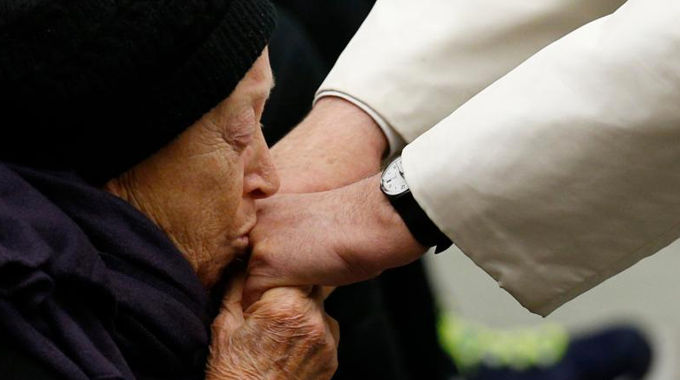
Which then leads to the pressing and unavoidable question: How can the Roman papacy or its bishops claim to be faithful men when they have, by their own institutional authority, changed the very commandments of God? Faithfulness cannot be divorced from obedience. It cannot be redefined in the language of continuity and ecclesial power while simultaneously discarding what God has spoken. To be faithful is to remain loyal to the covenant Word of the living God. Yet history testifies that the papal institution has elevated its own authority above that of Scripture, revising or obscuring divine commandments to suit human traditions.
By what authority does any man edit, suppress, or reinterpret the voice of God? If a pastor did this today; removed a commandment, softened divine warnings, or restructured biblical worship; he would rightly be called unfaithful. Yet when the papacy does it, we are told it is tradition, or development, or even inspiration.
But Scripture does not speak this way. Deuteronomy 4:2 declares, “You shall not add unto the word which I command you, neither shall you diminish ought from it.” In Deuteronomy 27 and 28, covenant blessings and curses are laid out clearly. Those who do not keep the whole law are under a curse (Deut. 27:26; Gal. 3:10). These are not cultural preferences or ceremonial shadows; they are reflections of God’s holiness and the permanence of His Word. To tamper with God’s commandments is to declare oneself above the Lawgiver, which is nothing less than a blasphemous inversion of authority. How, then, can the pope be faithful, if by his word the Church is instructed to do what God has commanded not to do; or told to neglect what God has declared holy?
And if faithfulness to the covenant defines true authority, then the papacy must be tested not by claims of succession but by the fruit of obedience. Jesus said, “If you love me, keep my commandments” (John 14:15). The true test of love for Christ is not found in liturgy, rank, or ecclesiastical robes, but in absolute submission to His Word. To presume to stand in the place of Christ while altering or annulling His commandments is not an act of faithfulness; it is an open act of rebellion, a bold seizure of divine authority. It is spiritual theft, a covetous grasp for the honor, reverence, and obedience that belongs to God alone. To change His words while claiming to represent Him is not merely error; it is idolatry of self and contempt for the very commandments one pretends to uphold.

The papal office claims infallibility when speaking ex cathedra, but what do we call a man who sits on a throne, calls himself “Holy Father,” and claims to speak the truth of God while contradicting the God-breathed Scriptures? Can he be said to be entrusted with the faith once delivered to the saints, or has he become a gatekeeper of a man-made system?
Scripture does not leave room for such contradictions. In fact, it warns of them. Paul writes in 2 Corinthians 11:13–15 that false apostles will masquerade as ministers of righteousness; even as Satan disguises himself as an angel of light. The most dangerous deception is not the atheist or the pagan, but the spiritual leader who speaks with religious authority while leading people away from the commandments of God. It is not Roman vestments that determine righteousness; it is the voice of God through His Word.
The pope and the bishops under him may claim spiritual authority; but if their teaching departs from the revealed commandments of God, they forfeit the very faithfulness that would qualify them to lead. Authority in God’s kingdom is never detached from submission to God’s covenant. A man is not faithful because he holds a title; he is faithful because he trembles at God’s Word and obeys it. No apostolic chain can sanctify disobedience. No church office can erase the curse upon those who nullify the law of God.

If we take Scripture seriously; if we believe that God does not change, that His Word stands forever (Isaiah 40:8), and that His commandments are truth (Psalm 119:151); then we must conclude that any system of leadership that alters His Word is disqualified from calling itself faithful. The papacy, by placing itself above Scripture, proves not divine inspiration but human presumption.
In the end, the Church is not preserved by institutional power, but by the Spirit of truth. And the Spirit never leads the Church away from the Word He inspired. True leadership is measured by submission to Christ, obedience to His Word, and unwavering fidelity to His commandments. Where the RCC has changed those commandments, it has stepped out of covenant and lost the right to claim apostolic authority. What remains is not the faith once delivered; but a shadow of it, dressed in human tradition and sustained by theological sleight of hand.
The Church of Christ has but one Head—Jesus Christ, who is the same yesterday, today, and forever. No bishop, no pope, no council can replace Him. To claim otherwise is to build not on the Rock, but on sand; and when the flood of truth rises, that house will fall.
The Church has no need for a pope, because it already has a Head. Christ alone is the Rock. Christ alone is infallible. Christ alone holds the keys of death and hell; not Peter, and certainly not a man who claims to sit in Peter’s place.
The Roman Church may speak of apostolic succession, but Scripture testifies to a very different kind of continuity; the continuity of the Spirit, the Word, and the gospel faithfully preached. Any tradition that departs from this witness, or exalts itself over it, cannot claim legitimacy in the eyes of God.
If the Church is to remain faithful to its foundation, it must forsake human thrones and return to the authority of Jesus Christ. For no man can lay another foundation than that which is already laid; Christ, the eternal Rock of our salvation.
But don't take my word for it....
Paul’s Letter to the Romans and the Church in Rome
Let’s begin with Paul’s epistle to the Romans, which was written around AD 56–58, during Paul’s third missionary journey, most likely from Corinth. In Romans 15:20–22, Paul says something very significant:
“Yea, so have I strived to preach the gospel, not where Christ was named, lest I should build upon another man's foundation.”
This means Paul was committed to preaching where Christ had not yet been preached; he avoided territories already evangelized by other apostles. He goes on to say:
“For which cause also I have been much hindered from coming to you. But now having no more place in these parts... I will come to you.”
The implication here is unavoidable: no apostle had yet laid a foundation in Rome. If Peter had already established a church in Rome, Paul’s entire argument collapses. It would make no sense for Paul to say that he was eager to preach there, because it would mean he was violating his own missionary principle of not building on another apostle’s foundation.
And yet, when Paul wrote that letter, he clearly acknowledged the existence of a Christian community in Rome; hence the letter. But this community was not founded by Peter or any apostle. Most likely, the Roman believers were Jews and Gentiles who had encountered the gospel in Jerusalem during Pentecost (Acts 2:10 mentions “visitors from Rome”) and carried it back to their own city. It was a grassroots community, not an apostolic church plant, and certainly not an organized episcopal see.
Even more damaging to the papal narrative is Romans 16, where Paul greets over twenty-five individuals in the Roman church by name; Prisca, Aquila, Andronicus, Junia, and others. But Peter is never mentioned. This is not a casual oversight. If Peter were the bishop of Rome, the spiritual father of that community, and the leading apostle of Christendom, Paul’s silence would be not only odd; it would be theologically and relationally inexplicable. Paul would never bypass such a significant figure in the very letter addressed to his church.
So What of Linus?
Now, the Roman Catholic tradition claims that Peter died in AD 67, during the Neronian persecution. Linus, according to that same tradition, succeeded Peter and became bishop from AD 67 to AD 76.
But here’s the problem: Paul was executed around AD 64–67, in the same period as Peter, supposedly during Nero’s reign. Yet Paul is writing about Rome, and greeting Roman believers including Linus, nearly a decade before Linus supposedly becomes bishop.
In 2 Timothy 4:21, written around AD 66–67, Paul mentions Linus as simply one among the brethren. There’s no indication of authority, no title, no succession. Linus is just another name among other Christians. If he were the bishop of Rome (or even being groomed to succeed Peter), one would expect Paul to refer to him with honor or distinction, particularly given Paul’s detailed instructions to Timothy regarding church leadership and the passing on of the faith. Yet again; there is silence.
So the timeline falls apart:
Paul writes to the Romans around AD 56–58, saying no apostle has laid a foundation there.
He sends greetings to believers in Rome, but not to Peter, allegedly the bishop of that city.
In 2 Timothy 4:21 (written around AD 66), Paul mentions Linus as a fellow believer, not a leader.
According to Catholic tradition, Peter dies in AD 67, and Linus becomes pope; at a time when there was no episcopal see in Rome, and no evidence of Peter ever founding or leading that church.
The claim that Linus became the second pope relies on an ecclesiastical myth constructed retrospectively; read back into the first century from a much later hierarchical church model that didn’t exist at the time.
Linus may well have been a respected Christian in Rome. He may even have exercised some level of pastoral leadership among the believers there. But there is no evidence that he succeeded Peter, no indication that Peter was bishop of Rome, and no biblical support for the idea that Linus held universal ecclesial authority.
The narrative of Linus as the second pope collapses under the weight of Scripture, chronology, and honest history. The apostolic church was not built on succession through Roman bishops, but on the cornerstone of Christ, through the preaching of the gospel by apostles who served and suffered; not ruled and enthroned.
In the end, the true Church of Christ looks not to Linus, or to Peter, or to Rome, but to Jesus Christ alone, who is “the head of the body, the church,” and “the only wise God and our Savior.”
Can the Magisterium Be Divinely Inspired When It Has Broken Covenant with the God It Claims to Serve?
To call an institution “divinely inspired” is not merely to praise its wisdom or esteem its longevity; it is to assert that it stands in active, Spirit-led communion with the living God. The Roman Catholic Church makes precisely such a claim regarding its Magisterium—the authoritative "teaching office" composed of the pope and bishops in union with him. It teaches that the Holy Spirit "Himself" preserves this body from error when it speaks definitively on faith and morals, and that obedience to it is obedience to God.
But such a claim must be tested; not by tradition, not by human office, not by institutional continuity, but by the character of God and the covenant He established with His people. It must be tested by the Word of God. And here we find an unavoidable contradiction: How can a teaching body be divinely inspired when it has demonstrably broken covenant with the very God it claims to represent?

Divine Inspiration Is Always Covenant-Bound
Throughout Scripture, divine inspiration is tied to covenantal obedience. God’s prophets were not infallible because of their title, lineage, or position; they were validated because they spoke in covenant faithfulness. They were sent to call Israel back to obedience, not to establish themselves as interpreters above the law of God. The moment a prophet contradicted God’s commandments or introduced false worship; even with signs or wonders; he was to be rejected (Deuteronomy 13:1–5).
Inspiration, in the biblical worldview, is not automatic. It is never institutional. It is contingent on fidelity. The Spirit does not indwell structures that violate the law of God. The anointing of the Spirit cannot be claimed by those who exalt their own authority above the Word.
When Israel broke covenant with God; when it altered His worship, neglected His law, and pursued its own understanding; the prophets declared judgment, not legitimacy. God withdrew His presence from the temple. He rejected their sacrifices. He sent them into exile.
Now consider the implications for the Roman Catholic Magisterium. This body claims not only to represent the Church, but to speak for God; to define truth, to issue binding interpretations of Scripture, and to preserve apostolic doctrine. Yet it has, over centuries, departed from the commandments of God, added to His Word, and replaced covenant fidelity with institutional control.
The Scriptures speak clearly: “Cursed be he that confirmeth not all the words of this law to do them” (Deuteronomy 27:26). The covenant God made with His people at Sinai was not a flexible document. The law was not a living tradition to be molded by priests or rulers. It was the revealed will of a holy God, who declared: “Ye shall not add unto the word which I command you, neither shall ye diminish ought from it” (Deuteronomy 4:2).
Yet the Magisterium has done exactly that.
It has removed the second commandment from catechetical teaching to allow the veneration of images.
It has reshaped the fourth commandment regarding the Sabbath; not with Scripture, but with ecclesiastical authority.
It has multiplied doctrines and decrees, elevating papal encyclicals and council rulings to the level of divine revelation.
It has permitted the "worship" of the Eucharist, which, though veiled in theological language, is in practice a bowing down to the created rather than the Creator. By venerating the consecrated host with gestures of adoration and worship; kneeling, genuflecting, even processions; it elevates a material element to divine status. Yet Scripture makes clear that worship is due to God alone, not to anything made by human hands, even if called sacred. This practice blurs the line between reverence and idolatry, substituting the true, spiritual worship of the risen Christ with ritual devotion to a perishable form.
It has exalted Mary with the title “Queen of Heaven,” a name once given to a pagan goddess associated with Baal worship—an idolatrous figure that God Himself condemned as an abomination in the Scriptures, and declared that indulgences can remit temporal punishment for sin; none of which are found in the Word of God.
And yet, it calls itself divinely inspired.
How can that be? Would the Spirit of God dwell in a house that has rejected the covenant He authored? Would He inspire a body that exalts man-made traditions over divine commandments? Christ Himself rebuked such practices when He said, “Why do ye also transgress the commandment of God by your tradition?” (Matthew 15:3). He told the Pharisees that making void the Word of God through tradition was not faithfulness; it was hypocrisy (Mark 7:13).
The Spirit Does Not Inspire Apostasy
The Catholic Magisterium invokes the guidance of the Spirit as the source of its doctrinal authority. But this is the very Spirit who convicts the world of sin, righteousness, and judgment (John 16:8). The Spirit magnifies Christ, not man. She leads the Church into truth by illuminating the Scriptures, not by supplanting them. She does not contradict what She has already revealed in the Word. She does not call for submission to teachings that rewrite the law of God.
The Spirit’s role is covenantal. She seals the believer to Christ not the beast, leads the Church in holiness, and glorifies the Son (Ephesians 1:13–14; John 16:14). She does not inspire a magisterium that usurps Christ’s headship, claims infallibility, and sits on a throne as if speaking ex cathedra were equivalent to the voice of God.
To say the Magisterium is inspired is to suggest that the Holy Spirit endorses a system that has betrayed its covenant obligations. That is theological madness. It is to claim the Spirit’s presence in what the Spirit would rebuke. It is to call holy what God has called corrupt. It is to sanctify spiritual adultery.
What, then, is this authority Rome claims? What is this throne the pope sits upon, robed in gold, titled “Holy Father,” exalted as “Vicar of Christ”? The very title "Vicar of Christ" means "in place of Christ"—which is precisely what the term "Antichrist" also means: one who stands in the stead of Christ, usurping His position. It is a title that, by definition, places a man where only the Son of God belongs. To claim such a role is not an act of service, but of spiritual substitution; an echo of the very deception Scripture warns against, wherein men exalt themselves to the throne of God while professing to represent Him. This is not humility, nor fidelity; it is the mystery of lawlessness disguised as piety. To desire the throne of Christ, to claim His titles, His authority, and the reverence that belongs to Him alone, is not only spiritual deception; it is covetousness of the highest order. It breaks the very commandment of God, specifically the Tenth, by yearning for the worship, honor, and submission that belong solely to the Son. Such ambition does not reflect the heart of a servant, but the grasping spirit of one who envies the glory of God. It is not the mark of a shepherd, but of one who inwardly longs to be worshiped as the Shepherd Himself.
This is not an accident; it is spiritual ambition masked as religious devotion. It is the same spirit that motivated Korah to say to Moses, “Ye take too much upon you” (Numbers 16:3), not recognizing that authority comes from God, not from self-appointment. It is the same spirit that sought to build a tower to heaven, that desired to be like God, that said, “I will ascend... I will be like the Most High” (Isaiah 14:14).
If the pope truly served Christ, he would descend from his throne, cast off his crown, and point the people to the Scriptures. He would say with John the Baptist, “He must increase, but I must decrease” (John 3:30). But instead, we have a system that commands worship-like reverence, that claims to open and shut the gates of heaven, and that sits in God’s temple showing itself to be God (2 Thessalonians 2:4).
This is not divine inspiration. This is spiritual deception.

Christ Is the Only Head of the Church
Christ alone is the head of His Church. He bought it with His blood. He governs it by His Word. He fills it with His Spirit. The Church does not need a vicar on earth, because Christ did not go silent when He ascended. He did not abdicate His throne. He sent His Spirit. He gave us His Word. He appointed elders; not monarchs. Servants; not priest-kings.
“To whom coming, as unto a living stone, disallowed indeed of men, but chosen of God, and precious, ye also, as lively stones, are built up a spiritual house...” (1 Peter 2:4–5). The foundation is Christ. The living stones are His people. And His Church is not governed by Rome, but by the risen Lord who reigns from heaven.
Any claim to divine inspiration that contradicts the revealed Word of God, alters the covenant He established, or hijacks His authority for institutional power; is false. Inspiration is proven by truth, not by claims. It is tested by fidelity, not by office. It is discerned by Scripture, not by tradition.
The Magisterium has broken covenant with God. It has redefined His commandments, supplanted His Son’s authority, and enthroned fallible men in the place of Christ. And for that reason, it cannot be divinely inspired. Whatever spirit animates such a system, it is not the Holy Spirit of God.
Let the Church hear once more the Word of the Lord:
“For the LORD is our judge, the LORD is our lawgiver, the LORD is our king; He will save us” (Isaiah 33:22).
Not a false prophet. Not a magisterium. The Almighty.
Deuteronomy 32:4 (KJV) declares with absolute clarity:
"He is the Rock, his work is perfect: for all his ways are judgment: a God of truth and without iniquity, just and right is he."
That is the true Rock; not Peter, not Linus, and certainly not any man who exalts himself on a throne, adorning himself with divine titles, and receiving veneration that belongs to God alone. The Rock of the Church is God Himself, whose ways are perfect and whose truth endures forever. To claim otherwise; as the Roman Magisterium dares to do; is to break covenant with the very God it professes to serve. Despite all its councils and decrees, the Magisterium cannot overturn what God has declared. By exalting a man as “Holy Father” and “Vicar of Christ,” they substitute the unchanging Rock with shifting sand. And when they change God’s commandments by their own authority, they reveal themselves not as guardians of truth, but as transgressors of it. According to the very law they claim to uphold, they place themselves under a curse; for God has said, “Cursed be he that confirmeth not all the words of this law to do them” (Deuteronomy 27:26).
The Rock has spoken. No man may take His place.


Comments