Christ's Spiritual House or Christendom's Empire? Revisiting Pius IX's Quanta Cura
- Michelle Hayman

- Jun 23
- 17 min read
Denzinger part 45
Pope Pius IX, Quanta Cura (1864): Does Christ's Great Commission Establish a Church-State Alliance?
One of the most revealing features of Quanta Cura appears before Pope Pius IX addresses religious liberty, socialism, naturalism, secular government, or the rights of conscience. Long before he reaches those subjects, he introduces an assumption that quietly governs much of the encyclical's argument. He speaks of the Catholic Church exercising a salutary force over society according to the institution and command of Christ Himself, and he laments attempts to remove what he describes as the "happy concord" that has existed between the sacerdotal ministry and civil government. To support this vision, he appeals to Christ's promise that the Church would continue her mission "unto the consummation of the world" (Matthew 28:20).
The question that immediately arises is whether the passage cited by Pius IX actually supports the conclusion he draws from it. The issue is not whether Christ intended His Church to endure until the end of the age. The issue is not whether the Gospel has implications for nations and rulers. The issue is whether the Great Commission establishes, either explicitly or implicitly, a privileged alliance between ecclesiastical authority and civil government. Upon close examination, it is difficult to find such a doctrine in the text itself.
The passage in question is among the most familiar in the New Testament:
"Go ye therefore, and teach all nations, baptizing them in the name of the Father, and of the Son, and of the Holy Ghost:
Teaching them to observe all things whatsoever I have commanded you: and, lo, I am with you alway, even unto the end of the world. Amen."
— Matthew 28:19–20
Christ's command is directed toward disciple-making. The apostles are instructed to preach, baptize, and teach. The promise attached to that command is that Christ Himself will remain with them throughout the entire age as they carry out this mission. Nothing in the passage speaks of political authority. Nothing in the passage describes a partnership between bishops and governments. Nothing in the passage establishes a permanent alliance between Church and State. The focus of the text is evangelization, not political administration.
To observe this is not to diminish the scope of Christ's kingship. Christ does not merely reign over private individuals. He reigns over all creation. He is Lord of kings and nations no less than He is Lord of individual believers. Scripture is explicit on this point. Psalm 2 addresses rulers directly:
"Be wise now therefore, O ye kings: be instructed, ye judges of the earth. Serve the LORD with fear, and rejoice with trembling."
— Psalm 2:10–11
Likewise, Paul declares that every authority ultimately exists under God's sovereign rule. The New Testament leaves no room for a secular realm that exists independently of Christ's lordship. Yet acknowledging Christ's authority over nations is not the same thing as asserting that Christ established a permanent institutional partnership between the Church and civil government. The first proposition is biblical. The second requires argument.
The distinction becomes clearer when one considers the actual circumstances in which Christ delivered the Great Commission. He entrusted this mission to a small group of disciples who possessed no political influence whatsoever. They held no public office. They commanded no armies. They exercised no governmental authority. Christ did not instruct them to seek control of the Roman state. He did not direct them to create a Christian empire. He did not tell them that the success of their mission depended upon cooperation from civil rulers. Instead, He sent them into a hostile world armed only with the Gospel and the promise of His presence.
The apostolic Church faithfully followed that pattern. Throughout the New Testament the Church appears as a missionary community existing within societies that are frequently indifferent or openly hostile to its message. The apostles preach before magistrates, governors, and kings, but they never attempt to merge ecclesiastical and civil authority. They call rulers to repentance, yet they never present a Church-State alliance as an essential feature of Christ's kingdom.
Indeed, some of the most important statements of Christ point in the opposite direction. When questioned about political obligations, Jesus replied:
"Render therefore unto Caesar the things which are Caesar's; and unto God the things that are God's."
— Matthew 22:21
This statement does not collapse the distinction between civil and spiritual authority. It recognizes it. Likewise, when standing before Pilate, Jesus declared:
"My kingdom is not of this world."
— John 18:36
Christ was not denying the universal scope of His reign. Rather, He was rejecting the notion that His kingdom advances through the mechanisms of worldly political power. His kingdom enters the world through proclamation, conversion, discipleship, and the work of the Holy Spirit. It is not propagated by governmental structures, nor is it dependent upon political patronage.
The historical context of the apostolic age reinforces this point. The New Testament was written under pagan governments. The apostles expected persecution far more readily than political partnership. The Church spread throughout the Roman Empire not because emperors protected it but because ordinary believers proclaimed Christ despite opposition. For nearly three centuries Christianity possessed no privileged relationship with the state. Yet during precisely those centuries the Gospel advanced with extraordinary effectiveness. The Church planted congregations across the Mediterranean world, produced martyrs, developed theology, preserved apostolic teaching, and transformed countless lives without the "happy concord" between Church and State that Pius IX appears to regard as so desirable.
This historical reality exposes the weakness of reading Matthew 28 as though it contained a doctrine of Christendom. The Great Commission was given before Constantine, before imperial Christianity, before established churches, before privileged bishops, and before any alliance between throne and altar. Christ's promise sustained the Church through centuries in which no such alliance existed. It therefore becomes difficult to argue that such an alliance belongs to the essential constitution of the Church.
What appears in Quanta Cura is not simply the teaching of Matthew 28. It is Matthew 28 interpreted through the lens of many centuries of Christian political development. By the nineteenth century, large portions of European Catholic thought had come to regard cooperation between Church and State as the normal and desirable condition of society. Yet historical normality is not the same thing as apostolic institution. One may argue that such cooperation can be beneficial under certain circumstances. One may argue that Christian rulers ought to govern according to Christian principles. One may even argue that societies flourish when influenced by Christian morality. Those are legitimate subjects for discussion. What cannot be established simply by appealing to Matthew 28 is the claim that Christ Himself instituted a permanent alliance between sacerdotal authority and civil government as part of the Church's divine constitution.
The Great Commission guarantees the perpetual presence of Christ with His people. It guarantees the success of His mission. It guarantees the endurance of the Gospel until the end of the age. What it does not guarantee is the perpetual existence of Christendom, the political privileges of the clergy, or the harmonious union of ecclesiastical and civil power. Those are conclusions that arise from later historical developments, not from the text itself.
The result is that Pius IX subtly moves from a biblical truth to a much larger ecclesiastical claim. The biblical truth is beyond dispute: Christ remains with His Church until the end of the age. The larger claim; that this promise includes the Church's right to exercise a distinctive public authority alongside civil government and to maintain a privileged alliance with political rulers, is far more difficult to establish. Matthew 28 teaches the former clearly. It does not teach the latter with anything approaching the same clarity. The distinction is crucial, because much of what follows in Quanta Cura depends upon it.
Pope Pius IX, Quanta Cura (1864): Christ's Kingdom and the Temptation to Think Like an Empire
One of the deepest assumptions underlying this section of Quanta Cura is the belief that a healthy society requires a close alliance between ecclesiastical authority and civil authority, and that governments ought not merely to tolerate the true religion but actively recognize, support, defend, and in certain respects enforce its claims. Pope Pius IX views the weakening of this alliance as a threat not only to the Catholic Church but to society itself. Behind his criticism of naturalism, secular government, and religious liberty lies the conviction that the proper ordering of public life depends upon a harmonious relationship between the sacerdotal ministry and civil power.
At first glance this concern may appear reasonable. Scripture certainly does not teach that governments exist independently of God. Kings, rulers, judges, and nations are accountable to their Creator. No Christian should embrace the modern fiction that religion belongs entirely to the private sphere while public life operates according to purely secular principles. Christ is Lord over nations no less than He is Lord over individuals.
Yet this acknowledgment immediately raises a different question. Does Christ's lordship over nations require an institutional alliance between the Church and political power? More specifically, does the New Testament present the Church as a body whose mission is properly fulfilled through cooperation with governments and civil authority?
When one turns to Christ and the apostles, the answer becomes far less obvious than Quanta Cura assumes.
Standing before Pilate, Jesus declared:
"My kingdom is not of this world: if my kingdom were of this world, then would my servants fight" (John 18:36).
Christ was not denying His authority over the world. Nor was He teaching that His kingdom is merely inward or private. Rather, He was describing the character of His kingdom. It does not originate from the structures of worldly power. It is not advanced by the methods through which earthly kingdoms preserve themselves. Its strength does not lie in political influence, legal privilege, military force, or governmental authority. It advances through the proclamation of truth, the work of the Holy Spirit, repentance, faith, and discipleship.
The apostles consistently preserve this distinction. Peter describes believers as:
"lively stones ... built up a spiritual house" (1 Peter 2:5).
Paul describes the Church as:
"an habitation of God through the Spirit" (Ephesians 2:22).
Again and again, the Church is presented in spiritual categories. It is a body whose head is Christ. It is a temple indwelt by the Spirit. It is a flock under the care of the Good Shepherd. It is a bride awaiting her bridegroom. It is a holy nation whose citizenship is ultimately in heaven. What is striking is how little the New Testament resembles the assumptions of later Christendom. The apostles never present the Church as a political institution whose normal condition depends upon privileged status within society. They present it as a pilgrim people whose life comes from above.
This becomes even more significant when one remembers the repeated warnings against friendship with the world. James writes with extraordinary force:
"Ye adulterers and adulteresses, know ye not that the friendship of the world is enmity with God? whosoever therefore will be a friend of the world is the enemy of God" (James 4:4).
James is not condemning ordinary interaction with society. He is warning against adopting the world's priorities, ambitions, methods, and loyalties. Throughout the New Testament there is a profound tension between the kingdom of God and the kingdoms of men.
Believers are called to obey lawful authorities, pray for rulers, and live peaceably where possible. Yet they are never encouraged to place their trust in political arrangements or to identify the success of Christ's kingdom with the support of earthly governments.
This raises a question that Quanta Cura never adequately addresses. If friendship with the world is enmity with God, why should the Church regard a permanent alliance with political power as an ideal condition? Why should the kingdom of Christ seek validation from the very structures of worldly authority that the apostles repeatedly treat with caution? Why should the spiritual house of God be defined by its relationship to governments when its true life comes from the indwelling presence of the Holy Spirit?
The history of the apostolic Church makes the question even sharper. Christianity spread throughout the Roman Empire without possessing political power. The apostles held no public offices. They controlled no legislatures. They commanded no armies. They enjoyed no legal privileges. They possessed neither wealth nor influence in the eyes of the world. Yet through preaching Christ crucified and risen they transformed the ancient world. The Gospel advanced not because governments supported it but often despite governmental opposition.
One of the enduring temptations of Christian history has been to confuse the kingdom of Christ with the structures of empire. Once Christianity became associated with imperial power, it became increasingly easy to think of the Church in political terms: centralized, administrative, juridical, and territorial. Yet the New Testament consistently resists this way of thinking. Christ's Church is not a sanctified version of the Roman Empire. It is not an empire with bishops replacing governors and a pope replacing an emperor. It is a spiritual house composed of living stones from every tribe, tongue, people, and nation. Its unity is created by the Holy Spirit, not by political administration. Its authority rests upon the Word of God, not upon the machinery of the state.
This is where the assumptions of Quanta Cura appear most vulnerable. Pope Pius IX rightly rejects the notion that society can flourish while completely ignoring God. Yet in opposing secularism he seems to assume that the alternative is some form of privileged alliance between ecclesiastical authority and civil power. The New Testament points in a different direction. It presents a Church whose power is spiritual rather than political, whose growth depends upon the Gospel rather than governmental support, and whose identity derives from union with Christ rather than from any relationship to the state.
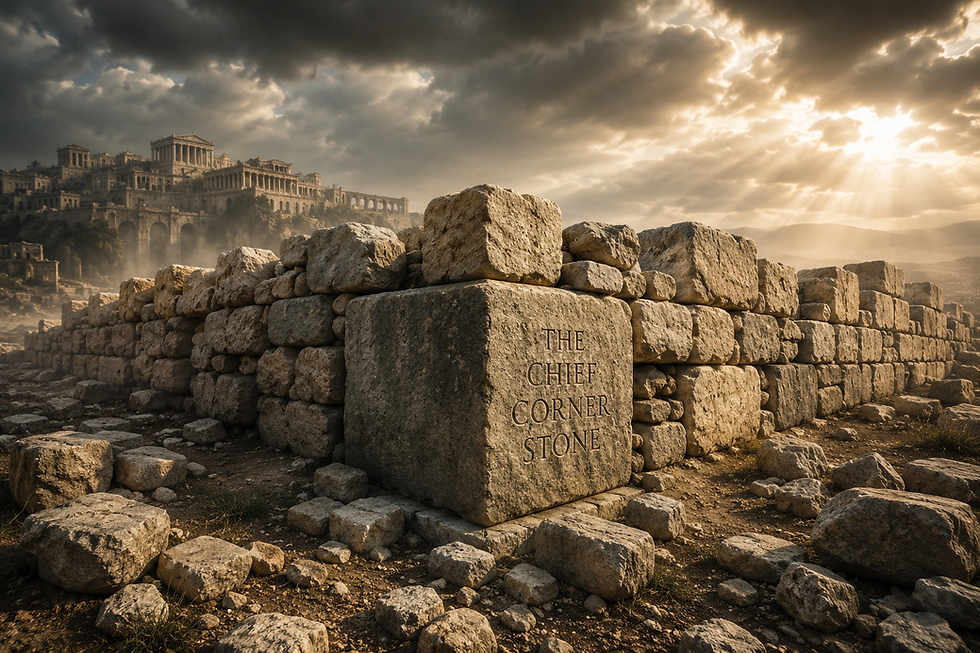
The kingdom of God certainly has implications for nations and rulers. No realm of human life stands outside Christ's authority. Yet it does not follow that Christ established His Church as a political institution or intended it to function through permanent alliances with civil governments. The Church is strongest when it remains what the apostles described it to be: a spiritual house built of living stones, founded upon the apostles and prophets, indwelt by the Holy Spirit, and resting upon Christ alone as its cornerstone. The closer the Church moves toward the logic of empire, the further it risks drifting from the apostolic vision of the kingdom whose King declared, "My kingdom is not of this world."
Pope Pius IX, Quanta Cura (1864): Truth Does Not Fear Examination
One of the most striking features of this section of Quanta Cura is the fear it expresses regarding freedom of conscience, freedom of worship, and the public discussion of competing ideas. Pius IX argues that liberty of conscience is a dangerous error and warns that if human opinions are permitted free discussion there will always be those who resist the truth and trust in human wisdom rather than divine revelation. The implication is clear: unrestricted freedom of religious expression creates a threat to truth itself.
At first glance, such a concern may appear understandable. Truth and error are not equal. Christianity has never taught that every opinion is equally valid or that every belief system leads equally to God. The apostles repeatedly warned against false teachers, destructive doctrines, and deceptive philosophies. The New Testament contains no trace of modern relativism.
Yet this is not the same thing as arguing that truth requires protection from open examination.
The remarkable thing about the apostolic age is that Christianity entered the world as a minority faith surrounded by competing philosophies, religions, mystery cults, pagan traditions, and hostile authorities. The apostles did not possess the power to silence their opponents. They did not have governments enforcing Christian orthodoxy. They did not rely upon censorship to preserve the Gospel. Instead they preached publicly, reasoned publicly, debated publicly, and appealed to evidence.
When Paul arrived in Athens, he did not call for the suppression of pagan philosophy. He entered the marketplace and reasoned with those who disagreed with him (Acts 17:17). He stood before the Areopagus and openly presented the Christian message in the midst of competing worldviews. Christianity emerged victorious not because rival voices were silenced but because the Gospel proved itself powerful.
The New Testament repeatedly assumes that truth can withstand examination. Paul instructs believers:
"Prove all things; hold fast that which is good."
— 1 Thessalonians 5:21
Likewise:
"Beloved, believe not every spirit, but try the spirits whether they are of God."
— 1 John 4:1
Such commands assume engagement, discernment, and testing. They do not suggest that believers should fear the existence of competing ideas. Rather, they trust that truth ultimately withstands scrutiny.
There is a deeper irony here. The Roman Church itself frequently appeals to the Church Fathers, councils, philosophical reasoning, historical argument, and theological debate in defence of its doctrines. Yet all of these require the freedom to examine claims, challenge assumptions, and compare arguments. If human opinions must never be allowed freedom of discussion because error may result, then much of the Church's own theological development would have been impossible.
The apostles did not ask governments to protect Christianity from criticism. They proclaimed Christ and trusted the power of truth. The Gospel conquered the Roman world without possessing the ability to silence its opponents. That historical fact alone should make us cautious about any suggestion that truth depends upon restricting discussion.
Truth does not fear examination. Falsehood does.
The confidence of the apostles rested not in the suppression of rival voices but in the conviction that Christ is risen, that the Gospel is true, and that the Spirit of God is able to lead people into truth. A faith that depends upon coercion, censorship, or legal privilege to preserve itself risks revealing a lack of confidence in the very truth it claims to defend.
Pope Pius IX, Quanta Cura (1864): Apostolic Christianity or Ecclesiastical Expansion?
As Quanta Cura continues, Pope Pius IX turns his attention to critics of religious orders, opponents of ecclesiastical privileges, advocates of greater civil control over church property, and those who question the authority of Rome over education, discipline, and public life. The tone becomes increasingly severe. Such people are described as enemies of religion, corrupters of youth, opponents of Christian civilization, and promoters of doctrines destructive to both Church and society.
Yet beneath the rhetoric lies a question of enormous importance that Pius IX never directly addresses. How much of the nineteenth-century Roman Catholic system can properly be identified with the apostolic Church itself?
This question is essential because the entire argument depends upon it.
Pius IX repeatedly speaks as though criticism of religious orders, criticism of ecclesiastical property claims, criticism of papal authority, or criticism of clerical control over education constitutes an attack upon Christianity itself. Yet that conclusion can only be sustained if it is first demonstrated that these institutions belong to the apostolic deposit of faith rather than to later historical developments within the life of the Church.
The distinction is crucial.
The apostles unquestionably established churches. They preached the Gospel, appointed elders, administered baptism, celebrated the Lord's Supper, instructed believers, cared for the poor, and proclaimed Christ throughout the world. These things belong to the foundation of Christian faith and practice.
What requires demonstration is whether every institution defended by Pius IX belongs to that same apostolic foundation.
Consider the discussion of religious orders.
Pius IX presents opposition to religious orders as opposition to a way of life approved by the Church and inspired by God. Certainly many religious orders performed valuable services throughout Christian history. Monasteries preserved ancient manuscripts. Monks and nuns cared for the sick. Missionaries travelled to distant lands. Religious communities often became centres of education, charity, and scholarship.
None of these contributions should be dismissed.
Yet usefulness is not the same thing as divine institution.
The question is not whether religious orders accomplished good things. The question is whether Christ and the apostles established them.
When one turns to the New Testament, one finds churches, elders, deacons, evangelists, apostles, prophets, teachers, and ordinary believers gathered as the people of God. One does not find Benedictines, Dominicans, Franciscans, Jesuits, Carmelites, or the countless religious orders that emerged centuries later. Their existence may be defended as beneficial developments, but it cannot simply be assumed that they belong to the original structure of apostolic Christianity.
This distinction between apostolic institution and later development becomes even more important when the discussion turns to wealth and property.
Pius IX strongly opposes those who challenge the Church's rights regarding temporal goods. Yet the New Testament presents a strikingly different atmosphere from that of later ecclesiastical institutions.
Christ Himself lived in remarkable simplicity.
The Son of Man declared:
"The foxes have holes, and the birds of the air have nests; but the Son of man hath not where to lay his head" (Matthew 8:20).
Peter could say:
"Silver and gold have I none" (Acts 3:6).
Paul repeatedly supported himself through manual labour and warned against those who viewed godliness as a means of gain.
One of the recurring themes of the New Testament is suspicion toward the accumulation of wealth.
Christ warns:
"Lay not up for yourselves treasures upon earth" (Matthew 6:19).
He tells His disciples:
"Sell that ye have, and give alms" (Luke 12:33).
He declares:
"How hardly shall they that have riches enter into the kingdom of God!" (Mark 10:23).
These teachings create an unavoidable tension. Pius IX condemns those who challenge the Church's temporal holdings, yet the New Testament repeatedly warns religious people against accumulating treasure. The issue is not whether churches may own buildings or possess resources for ministry. The issue is whether institutions that possess enormous wealth, vast property holdings, priceless collections of art, accumulated treasures, and extensive financial resources can simply assume that such accumulation harmonizes naturally with the example of Christ and the apostles.
The appeal to charitable works does not entirely resolve the question.
No doubt churches have fed the poor, educated the young, cared for the sick, and supported countless worthy causes. Yet Christ never taught that charitable activity automatically justifies the accumulation of wealth. The prophets repeatedly condemned religious systems that maintained splendour while neglecting justice and mercy. The issue is not whether good works exist. The issue is whether the institutional pursuit and preservation of wealth sits comfortably alongside the radical simplicity of apostolic Christianity.
The same pattern appears in Pius IX's discussion of education.
The encyclical expresses concern that young people may be removed from the influence of the Church and exposed instead to destructive ideas. To a certain extent, this concern is understandable. Every generation shapes the next generation through education. No worldview is neutral. The formation of children matters profoundly.
Yet Scripture places the primary responsibility for that formation upon parents rather than upon ecclesiastical institutions.
Paul instructs fathers:
"Bring them up in the nurture and admonition of the Lord" (Ephesians 6:4).
The family existed before the Church and before the state. Parents receive their responsibility from God, not from governments and not from ecclesiastical hierarchies. Consequently, the debate is not simply whether children should receive moral and religious instruction. The deeper question concerns who possesses ultimate responsibility for that instruction and whether a centralized ecclesiastical structure may legitimately claim authority over an area Scripture first entrusts to the family.
As the encyclical progresses, the discussion ultimately arrives at the subject that underlies almost everything else: papal authority itself.
Pius IX condemns those who suggest that Catholics may question certain papal judgments, disciplinary rulings, or administrative decisions provided they do not reject defined doctrines of faith and morals. Yet here once again the central issue is assumed rather than demonstrated.
The New Testament unquestionably establishes the authority of Christ.
It unquestionably establishes the authority of apostolic teaching.
It unquestionably commands believers to submit to the truth once delivered to the saints.
What remains to be demonstrated is that future bishops of Rome inherit a plenary authority over the universal Church such that their judgments concerning discipline, administration, and ecclesiastical governance bind the conscience of every Christian.
That conclusion cannot simply be asserted.
It must be proved.
Throughout this section of Quanta Cura, the same underlying problem continually reappears. Historical developments are treated as though they stand on the same level as apostolic institutions. Centuries of ecclesiastical expansion are presented as though they belong self-evidently to the original deposit of faith. Religious orders, vast property holdings, centralized authority structures, and extensive claims of papal jurisdiction are defended as though their legitimacy were beyond dispute.
Yet the New Testament consistently directs attention back to simpler foundations.
Christ is the cornerstone.
The apostles are the foundation.
Believers are living stones.
The Church is a spiritual house.
The Holy Spirit is its life.
The Gospel is its power.
The question, therefore, is not whether these later institutions accomplished good things, nor whether they sometimes contributed positively to Christian civilization. The real question is whether every structure defended by Pius IX can genuinely claim apostolic origin. The encyclical repeatedly assumes that answer. The burden of proof, however, still remains.
An even deeper issue emerges when Pius IX rejects the proposition that "to the Church does not belong the right to coerce by temporal punishments violators of its laws." This statement reaches beyond questions of administration and enters the very nature of faith itself.
The difficulty is that the New Testament never presents genuine faith as something that can be produced through coercion. Faith is a matter of the heart. It arises through conviction, repentance, and the work of the Holy Spirit. Christ stands at the door and knocks; He does not batter it down. The apostles persuade, reason, exhort, rebuke, and teach, but they do not compel belief through temporal penalties. A government may force external conformity. It may compel attendance. It may silence dissent. It may punish disobedience. What it cannot do is create genuine faith.
This is why the idea of coercing religion sits so uneasily alongside the Gospel itself. A faith embraced under threat is not necessarily faith at all. Love that is compelled ceases to be love. Allegiance extracted by force is not the same thing as conviction. A marriage entered into at sword-point is not a true marriage because the essential element of willing consent is absent. In much the same way, religious conformity secured through temporal punishment may produce outward obedience, but it cannot produce the inward trust that Scripture calls faith.
Throughout the New Testament, Christ seeks disciples rather than subjects of compulsion. He invites men and women to follow Him. He allows many to walk away. The rich young ruler departs sorrowful, yet Christ does not compel him. Large crowds abandon Him in John 6, yet He does not force their return. The apostles inherit the same pattern. They preach publicly, persuade patiently, and entrust the results to God. Their confidence rests not in coercive power but in the power of truth itself.
This is one reason why the Church is repeatedly described as a spiritual house indwelt by the Holy Spirit. Spiritual realities cannot ultimately be produced by temporal punishments. Regeneration cannot be legislated. Repentance cannot be compelled. Faith cannot be imposed by decree. The kingdom of Christ advances through the Word of God and the Spirit of God, not through the mechanisms by which earthly powers enforce conformity.
The deeper concern, therefore, is not merely whether the Church possesses the right to punish. It is whether the very concept misunderstands the nature of Christian faith. The Gospel calls for hearts transformed by grace, not merely behaviour regulated by authority. A Church that increasingly relies upon coercion risks adopting the methods of earthly kingdoms rather than the methods of the kingdom whose King declared, "My kingdom is not of this world" (John 18:36).


Comments