The Merchants of Christendom

Denzinger Part 3
The Ordinations of Simoniacs (Roman Council, AD 1060)
At first glance this decree may appear to be a minor administrative ruling, but it reveals something significant about the condition of the medieval Church and the practical problems created by widespread corruption.
The issue being addressed is simony, the buying and selling of spiritual offices. The name comes from Simon Magus in the Book of Acts, who attempted to purchase spiritual authority from the apostles:
"Give me also this power, that on whomsoever I lay hands, he may receive the Holy Ghost." (Acts 8:19)
Peter answered sharply:
"Thy money perish with thee, because thou hast thought that the gift of God may be purchased with money." (Acts 8:20)
Scripture leaves little doubt that spiritual gifts and offices are not commodities to be bought and sold. Yet by the eleventh century the practice had become so widespread that men were purchasing bishoprics, priesthoods, and other ecclesiastical positions.
The council therefore declares:
"We judge that in preserving dignity no mercy is to be shown toward the simoniacs... we decree that they are to be deposed."
This is noteworthy. The council did not merely rebuke those involved. It ordered that simoniacs be removed from office altogether.
However, a second question had arisen. If a corrupt bishop had purchased his office, what should be done with the priests whom he had ordained? Were their ordinations invalid? Were the sacraments they performed invalid?
Nicholas II took a practical approach. While the simoniacs themselves were to be deposed, those ordained by them without participating in the corruption were allowed to remain in office. The decree explains that this permission was not based upon ancient precedent but upon necessity:
"the authority of the ancient Fathers has not promulgated this by order or grant, but too great a necessity of the time has forced us to permit it."
That statement is perhaps the most revealing part of the document. The corruption had become so extensive that removing every cleric connected to simoniacal ordinations would have caused enormous disruption throughout the Church.
For a Scripture-first reader, this raises important questions. The New Testament repeatedly warns against leaders motivated by money:
"Feed the flock of God... not for filthy lucre." (1 Peter 5:2)
"Through covetousness shall they with feigned words make merchandise of you." (2 Peter 2:3)
"The love of money is the root of all evil." (1 Timothy 6:10)
The apostles consistently warned against those who would turn the things of God into a means of personal gain. Yet here, centuries later, the Church was dealing not with isolated incidents but with a system in which spiritual offices themselves were being bought and sold.
This decree therefore serves as an important historical witness. It does not introduce a major new doctrine, but it exposes the realities of the medieval Church and the difficulties that arose when biblical warnings against greed and corruption were ignored.
The council rightly condemned simony and ordered the deposition of those guilty of it. Yet the fact that special allowances had to be made because the practice had become so widespread illustrates how far the institutional Church had drifted from the simplicity of the apostolic pattern described in the New Testament.
For anyone tracing the development of church history, this document is valuable not because it creates a new doctrine, but because it reveals the growing tension between the apostolic ideal and the realities of medieval ecclesiastical power.
Berengarius and the Eucharist (Roman Council, AD 1079)
This document marks a significant moment in the development of Eucharistic doctrine.
The issue centered on Berengarius of Tours, who questioned the increasingly common teaching that the bread and wine of the Lord's Supper cease to be bread and wine and become the literal body and blood of Christ.
As part of his reconciliation with the Church, Berengarius was required to swear the following confession:
"the bread and wine which are placed on the altar are substantially changed into the true and proper and living flesh and blood of Jesus Christ."
The statement goes even further:
"not only through the sign and power of the sacrament, but in its property of nature and in truth of substance."
This language is important because it moves beyond affirming Christ's presence in the Eucharist and seeks to define exactly what happens to the elements themselves.
The central question for Scripture-first readers becomes whether this language reflects the teaching of Christ and the apostles or whether it represents a later theological development.
When instituting the Lord's Supper, Jesus sat with His disciples at a meal. He took bread, blessed it, broke it, and gave it to them:
"Jesus took bread, and blessed it, and brake it, and gave it to the disciples, and said, Take, eat; this is my body." (Matthew 26:26)
Likewise He took the cup and shared it among them.
The setting is important. The Eucharist appears in Scripture as a participatory meal shared among believers in remembrance of Christ's death and in communion with Him. The emphasis falls upon receiving, eating, drinking, remembering, proclaiming, and participating.
Paul writes:
"The cup of blessing which we bless, is it not the communion of the blood of Christ? The bread which we break, is it not the communion of the body of Christ?" (1 Corinthians 10:16)
And again:
"For as often as ye eat this bread, and drink this cup, ye do shew the Lord's death till he come." (1 Corinthians 11:26)
It is noteworthy that Paul continues to call the consecrated element "bread."
Scripture certainly presents the Supper as holy and profound. Yet the New Testament does not explain the mystery through philosophical categories such as substance, nature, accidents, or metaphysical transformation. Nor does it describe a priest pronouncing a specific sacramental formula that changes the bread and wine into another substance.
Instead, the apostles consistently direct attention to Christ Himself.
Just as significant is the New Testament's teaching concerning Christ's present ministry. After His resurrection and ascension, Christ is said to be seated at the right hand of the Father:
"This man, after he had offered one sacrifice for sins for ever, sat down on the right hand of God." (Hebrews 10:12)
And again:
"For Christ is not entered into the holy places made with hands ... but into heaven itself, now to appear in the presence of God for us." (Hebrews 9:24)
The emphasis throughout Hebrews is that Christ's sacrifice is complete, sufficient, and eternally effective.
"For by one offering he hath perfected for ever them that are sanctified." (Hebrews 10:14)
The apostles therefore present the Lord's Supper as a remembrance and proclamation of that finished work:
"This do in remembrance of me." (Luke 22:19)
As one moves through church history, however, increasing effort is devoted to defining precisely how Christ is present in the Eucharist and exactly what occurs to the bread and wine. What began as a sacred mystery becomes the subject of increasingly detailed theological explanation.
For many Scripture-first readers, there is no difficulty in confessing the mystery of Christ's presence among His people. The question is whether God intended that mystery to be defined philosophically at all. Divine mysteries often remain mysteries in Scripture. Yet throughout history men have frequently sought to explain what God has not fully explained.
This document represents a major stage in that process.
The oath demanded of Berengarius does not simply affirm the words of Christ:
"This is my body."
It requires assent to a specific explanation of what those words mean, namely that the bread and wine are substantially changed into Christ's physical body and blood.
An additional question naturally follows. If Christ intended the Eucharist to be adored as a transformed object, where do the apostles teach this? In the New Testament the bread is blessed, broken, shared, eaten, and received. The focus remains on Christ and His saving work rather than on the elements themselves as objects of devotion.
At no point in the apostolic writings do we find believers gathering to adore the bread, carrying it in procession, displaying it for veneration, or treating it as an object toward which acts of worship are directed.
This also raises an interesting historical comparison. Ancient pagan theurgists such as Iamblichus taught that divine powers could be drawn down or made present through sacred rites and invocations. Iamblichus argued that the divine does not automatically descend, but is approached through ritual action. Whatever differences may exist between Christian sacramental theology and pagan theurgy, a Scripture-first reader may still ask an important question: if Christ is presently seated at the right hand of the Father and remains there until His return,
"whom the heaven must receive until the times of restitution of all things" (Acts 3:21),
then what exactly is occurring when it is claimed that Christ becomes physically present upon an altar through the words of a priest?
Roman Catholic theology would answer that Christ is not summoned or brought down from heaven, but becomes sacramentally present. Yet the question itself illustrates how far the discussion has moved from the simple language of the New Testament.
The apostles speak of remembrance, communion, thanksgiving, participation, proclamation, and faith. By the eleventh century the discussion had expanded into detailed claims concerning substance, physical presence, and transformation.
This document therefore stands as a major milestone. It reveals a shift from the simple biblical language of mystery, communion, and remembrance toward increasingly precise metaphysical definitions concerning the Eucharist.
Whether one accepts or rejects those conclusions, the significance of this text is undeniable. By AD 1079 the Western Church was insisting not merely upon belief in Christ's presence in the Eucharist, but upon a particular explanation of how that presence was understood. It is one of the clearest signs so far of the movement from apostolic simplicity toward the elaborate sacramental theology that would come to characterize the medieval Church.
The Sacramental Nature of the Diaconate (Council of Benevento, AD 1091)
This brief canon may seem insignificant at first glance, yet it preserves an important historical observation about the ministry of the early Church.
The council states:
"We call sacred orders the diaconate and the priesthood. Since we read that the early Church had only these, only concerning these do we have the precept of the Apostle."
The immediate purpose of the canon is to regulate episcopal elections. A man was not to be elevated to the episcopacy unless he had first lived faithfully within the sacred orders.
Yet the most striking statement is the council's acknowledgment that:
"the early Church had only these."
Namely:
Deacons
Presbyters (elders)
and that only these orders possess explicit apostolic warrant.
This observation is significant because it directs attention back to the New Testament itself.
When Paul writes concerning church leadership, he gives qualifications for:
"bishops" (1 Timothy 3:1-7)
and
"deacons" (1 Timothy 3:8-13).
Likewise in Titus:
"ordain elders in every city" (Titus 1:5)
and immediately afterward discusses the qualifications of a bishop (Titus 1:7), suggesting that the terms elder and bishop were closely connected in the apostolic age.
Similarly, when Paul addresses the Philippian church, he writes:
"to all the saints in Christ Jesus which are at Philippi, with the bishops and deacons" (Philippians 1:1).
No mention is made of cardinals, archbishops, patriarchs, subdeacons, acolytes, porters, exorcists, or the many ranks that would later characterize the medieval Church.
Indeed, this is what makes the canon so noteworthy. Earlier documents in the Denzinger have already described elaborate hierarchies of minor orders:
Subdeacons
Acolytes
Exorcists
Readers
Porters
along with detailed ordination ceremonies attached to each office.
Yet here the council itself admits that when one examines the apostolic writings, only the diaconate and the presbyterate are clearly established by apostolic command.
For a Scripture-first reader, an obvious question follows. If the apostles only explicitly instituted bishops/elders and deacons, upon what authority were the numerous later grades of clerical office introduced?
The New Testament consistently emphasizes service rather than rank:
"One is your Master, even Christ; and all ye are brethren." (Matthew 23:8)
And:
"Whosoever will be chief among you, let him be your servant." (Matthew 20:27)
The apostles certainly recognized leadership within the Church, but they describe that leadership primarily in terms of shepherding, teaching, and serving rather than ascending through a complex hierarchy of ecclesiastical offices.
This canon therefore provides an interesting glimpse into the tension between the simplicity of the apostolic Church and the increasingly developed structure of the medieval Church. While not rejecting the later offices, the council openly acknowledges that the earliest Church, as witnessed in Scripture, possessed a far simpler ministerial framework.
This text is valuable because it preserves an admission from within the medieval Church itself: when one turns back to the apostolic writings, the ministries clearly commanded by the apostles are those of elders and deacons. The many additional clerical ranks that developed over the centuries belong to later ecclesiastical history rather than to the explicit pattern recorded in the New Testament.
Obedience Owed the Church (Lateran Council, AD 1102)
This decree was issued during the conflict between Pope Paschal II and the Holy Roman Emperor Henry IV, a struggle that formed part of the wider Investiture Controversy. Yet beneath the political conflict lies a much deeper issue: the question of authority.
The formula required believers to declare:
"I declare anathema every heresy ... which teaches and declares that excommunication is to be despised and that the restrictions of the Church are to be cast aside."
It then continues:
"I promise obedience to Paschal, the supreme Pontiff of the Apostolic See, and to his successors."
At first glance this may seem unremarkable. Christians are called to respect spiritual authority. Scripture says:
"Obey them that have the rule over you, and submit yourselves." (Hebrews 13:17)
Yet Scripture also establishes a higher principle:
"We ought to obey God rather than men." (Acts 5:29)
The question therefore is not whether authority exists. The question is where that authority comes from, how far it extends, and whether the claims being made are the same claims made by Christ and the apostles.
What makes this document significant is that it stands in sharp contrast to many of the earlier texts already examined.
When Julius I intervened in the fourth century, he appealed largely to custom and precedent.
When Serdica granted Rome appellate authority, it did so through a council.
When Innocent and Zosimus asserted Petrine authority, the claims were stronger, but they still represent a stage in an ongoing development.
By Gelasius, Rome was claiming primacy directly from Christ rather than from councils.
By Hormisdas, the Roman See was being described as the place where the Catholic faith had always remained unstained.
Now, by the beginning of the twelfth century, the progression has reached a remarkable point. The faithful are no longer merely being asked to confess the apostolic faith. They are required to swear obedience to a particular bishop and his successors.
If universal papal jurisdiction was clearly established by Christ and universally recognized from the beginning, why do the claims appear to grow century after century?
The Denzinger itself seems to reveal a steady expansion.
What began as honor becomes primacy.
What begins as primacy becomes supremacy.
What begins as influence becomes jurisdiction.
What begins as respect becomes obedience.
And what begins as an appeal to apostolic tradition eventually becomes a requirement to submit to the Roman Pontiff himself.
The New Testament presents a very different picture of authority. The apostles consistently point believers to Christ.
"For we preach not ourselves, but Christ Jesus the Lord." (2 Corinthians 4:5)
Peter himself writes:
"Neither as being lords over God's heritage, but being ensamples to the flock." (1 Peter 5:3)
And Christ warned His disciples:
"The kings of the Gentiles exercise lordship over them... but ye shall not be so." (Luke 22:25-26)
Yet throughout the documents examined so far, one repeatedly encounters an increasing concentration of authority in a single see and ultimately in a single office.
The issue is not merely theological. History demonstrates what happens whenever large concentrations of power become insulated from challenge. The greater the claim to authority, the greater the potential for abuse. If questioning a doctrine can be treated as rebellion, if disagreeing with a bishop can be treated as disobedience to God, and if separation from a particular see becomes equivalent to separation from Christ Himself, then the institutional structure possesses immense power over conscience.
That concern becomes even more serious when viewed alongside the many developments already encountered in these documents: the growth of papal claims, the increasing authority of tradition, the multiplication of anathemas, the rise of saint veneration, the defense of images, and the gradual movement away from the simple language of Scripture toward increasingly elaborate ecclesiastical systems.
For a Scripture-first reader, the fundamental question remains unchanged:
Where did Christ or the apostles command believers to swear obedience to the bishop of Rome and his successors?
The document assumes such obedience. It does not demonstrate it from Scripture.
For that reason this decree is one of the clearest examples so far of the development being traced throughout this study. The center of authority appears to move steadily away from the apostolic writings themselves and increasingly toward the institutional Church and its highest office. Whether one views that as legitimate development or as an accumulation of power is precisely the question these documents compel the reader to examine.
Ordinations by Heretics and Simoniacs (Council of Guastalla, AD 1106)
This decree is noteworthy because it reveals the practical difficulties created by centuries of ecclesiastical disputes, schisms, and struggles over authority.
The council begins with a remarkable admission:
"For many years now the broad extent of the Teutonic kingdom has been separated from the unity of the Apostolic See."
It then laments that:
"only a few priests or Catholic clergy are found in such a broad extent of territory."
The problem confronting the council was straightforward. Large numbers of bishops and clergy had been ordained while separated from Rome. If every one of these ordinations were simply declared invalid, enormous regions of Christendom would suddenly be left without recognized clergy.
The council therefore adopted a practical solution. Bishops ordained during the schism would be received and allowed to retain their office provided they were not guilty of simony, usurpation, or serious crimes. The same principle was extended to clergy of lower rank.
The justification offered is particularly interesting:
"instructed by the examples and writings of our Fathers, who in different times received into their ranks the Novatians, the Donatists, and other heretics."
In other words, precedent was being used to justify reconciliation rather than wholesale removal.
One of the recurring themes encountered throughout the Denzinger is the claim that communion with Rome is essential to the unity of the Church. Again and again separation from the Roman See is presented as separation from the true Church itself.
Yet here the council openly acknowledges that vast territories had existed outside Roman communion for years and that many of their clergy would now be accepted and recognized.
This creates an obvious tension.
If separation from Rome automatically invalidated ministry, why could these clergy now be received?
If their ordinations remained valid enough to be recognized upon reconciliation, what exactly had been lacking during the years of separation?
The practical necessities of church life seem to have forced a more flexible approach than some of the stronger theoretical claims might suggest.
Another revealing feature is the repeated appeal to necessity.
Earlier we saw special allowances made for clergy connected to simoniacal ordinations because the corruption had become so widespread that strict enforcement would have caused chaos.
Here we find a similar situation. The sheer number of clergy involved appears to have made absolute enforcement impossible.
The result is another example of a recurring pattern in church history: principles are stated in absolute terms, but practical realities often require exceptions.
The New Testament certainly emphasizes unity:
"There is one body, and one Spirit." (Ephesians 4:4)
Yet the apostles consistently locate that unity in Christ:
"For other foundation can no man lay than that is laid, which is Jesus Christ." (1 Corinthians 3:11)
The emphasis falls upon faithfulness to Christ and the apostolic gospel rather than administrative attachment to a particular ecclesiastical center.
This document is significant because it shows the tension between theory and reality. On the one hand, communion with Rome is increasingly presented as essential. On the other hand, when large portions of Christendom exist outside that communion, practical necessity leads to accommodation and reconciliation.
Perhaps the most striking feature of the document is its language of the Church as a mother:
"the maternal womb of the Church be open."
Whatever one concludes about the claims of Rome, the council here chooses reconciliation over exclusion. Faced with thousands of clergy and countless believers affected by years of division, it sought restoration rather than further fragmentation.
This reference to the "Teutonic kingdom" is also interesting in light of later developments. The intertwining of ecclesiastical authority, imperial power, and military orders would continue to grow throughout the medieval and early modern periods.
One intriguing example appears centuries later in the work of the Jesuit scholar Athanasius Kircher. With papal approval, Kircher attempted to decipher the hieroglyphs of ancient Egypt and dedicated one of his works concerning an Egyptian obelisk to Emperor Ferdinand III.
Although modern scholarship has shown that Kircher's hieroglyphic translations were largely incorrect, his writings remain historically valuable because they reveal how seventeenth-century Catholic thinkers understood sacred kingship, ancient wisdom, imperial authority, and the Christian order of society.
In my own translation of Kircher's dedication, Ferdinand III is described as the Grand Master of the Teutonic Knights, linking imperial rule, military-religious orders, and sacred symbolism into a single vision of authority. Even more strikingly, Kircher addresses Ferdinand as Caesar.
What does Caesar have to do with Christ?
The Caesars represented the Roman imperial system under which Jesus was crucified and under which many early Christians suffered persecution. The apostles proclaimed not the kingdom of Caesar but the Kingdom of God. Christ Himself declared:
"My kingdom is not of this world." (John 18:36)
Yet here, centuries later, we find a Christian emperor being honored with the title of Caesar while simultaneously being linked to a military-religious order whose influence would echo throughout later European history.
This connection is significant because it highlights how dramatically the structure of Christendom had evolved from the comparatively simple pattern found in the New Testament. The earliest believers gathered around Christ, the apostles' teaching, fellowship, prayer, and the breaking of bread. Leadership was entrusted to elders and deacons within local assemblies.
By contrast, the world reflected in these later documents is one of emperors, military orders, councils, papal authority, legal institutions, and alliances spanning entire kingdoms. The language of sacred kingship, imperial rule, ecclesiastical authority, and military power increasingly appears woven together into a unified vision of Christian society.
Whether this development represents the transformation of the Roman world by Christianity or the gradual adoption of imperial concepts into the life of the Church is a question readers must consider for themselves. What is clear is that the world of Kircher, Ferdinand III, and the Teutonic Order looks very different from the world of Galilean fishermen proclaiming a crucified and risen Messiah under the rule of Rome.


Questions
The Council of Guastalla refers to the vast "Teutonic kingdom" and reveals how deeply intertwined ecclesiastical authority and political power had become. This raises several important historical questions.
1. If Christ declared, "My kingdom is not of this world" (John 18:36), how did the Church become so closely intertwined with imperial structures and military orders?
The New Testament presents the Church as a spiritual body spread among the nations. Yet by the medieval period we encounter emperors, papal claims of universal jurisdiction, and military-religious orders wielding political and military influence across Europe.
2. Why do we find increasing appeals to emperors and Caesars in later Christian history when the apostles consistently pointed believers to Christ as the only Head of the Church?
Centuries after the apostles, rulers such as Ferdinand III were being described in highly exalted terms. In Athanasius Kircher's dedication (Oedipus Aegyptiacus (1652–1654), Ferdinand is even presented with imperial language associated with Caesar.
Has the center of authority shifted from Christ and the apostles toward a fusion of ecclesiastical and imperial power?
3. What should we make of the Teutonic Order itself?
The Teutonic Knights began as a religious military order operating under papal authority. Yet over time they became a territorial and political power in their own right.
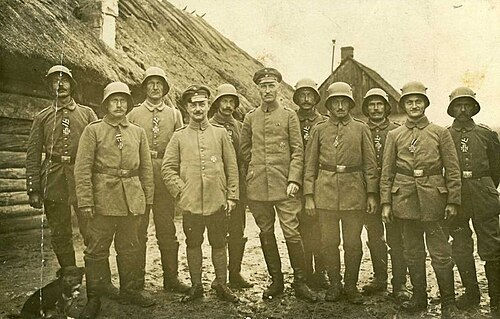
Their emblem, the black cross on a white field, later became part of German military symbolism and eventually influenced symbols adopted in modern Germany, including forms associated with the Iron Cross tradition.
How did a symbol associated with a medieval religious military order become incorporated into later expressions of German nationalism and militarism?
4. Why does the language of "Caesar" begin to reappear in a Christian context when the New Testament presents Jesus, not Caesar, as Lord?
The earliest Christians often suffered under Caesars.
They confessed:
"Jesus is Lord."
A confession that implicitly challenged the claims of imperial supremacy.
Yet later Christian civilization increasingly embraced imperial language, imperial symbolism, and imperial titles.
If Ferdinand III is being celebrated as a Christian Caesar, readers may ask:
Is this the fulfillment of Christian civilization, or evidence of a gradual return to the very imperial model from which the early Church originally distinguished itself?
See my earlier translations of the works of Athanasius Kircher.
Simony, Celibacy, Investiture, and Church Authority (First Lateran Council, AD 1123)
The First Lateran Council is often remembered for ending the Investiture Controversy, but the canons themselves reveal much more. They provide a window into the growing struggle over money, authority, marriage, and power within the medieval Church.
The first canon continues the centuries-long battle against simony:
"We forbid in every way by the authority of the Apostolic See that anyone by means of money be ordained or promoted in the Church of God."
Those who purchased ordinations or ecclesiastical offices were to be deprived of their position.
This is significant because it reveals how widespread the problem had become. The Church was repeatedly condemning the same practice because the practice repeatedly continued. Earlier councils, popes, and synods had issued similar decrees, yet the buying and selling of church offices persisted generation after generation.
Scripture strongly condemns such conduct.
The apostolic model presents ministry as a calling from God, not a commodity to be bought and sold.
The council next addresses clerical celibacy:
"We absolutely forbid priests, deacons, or subdeacons the intimacy of concubines and of wives."
This canon is particularly important because Scripture nowhere commands universal celibacy for church leaders.
In fact, when Paul lists the qualifications for overseers and deacons, he assumes many will be married:
"A bishop then must be blameless, the husband of one wife." (1 Timothy 3:2)
Likewise:
"Let the deacons be the husbands of one wife." (1 Timothy 3:12)
Peter himself was married:
"And when Jesus was come into Peter's house, he saw his wife's mother laid, and sick of a fever." (Matthew 8:14)
Paul even defends the right of apostles and church leaders to have believing wives:
"Have we not power to lead about a sister, a wife, as well as other apostles, and as the brethren of the Lord, and Cephas?" (1 Corinthians 9:5)
For this reason many readers see a distinction between voluntary celibacy for the sake of ministry and mandatory celibacy imposed as a universal rule.
The council then turns to ecclesiastical property:
"Laymen ... have no faculty for determining anything concerning ecclesiastical possessions."
And:
"let the bishop have the care of all ecclesiastical business."
This reflects the larger struggle between Church and state that dominated the age. Kings and nobles had long exercised influence over church appointments and property. The papacy increasingly sought to remove such influence and place ecclesiastical affairs entirely under clerical control.
From one perspective this protected the Church from secular interference.
From another perspective it concentrated increasing authority within the ecclesiastical hierarchy itself.
The New Testament presents a much simpler picture.
Christ taught:
"The kings of the Gentiles exercise lordship over them ... but ye shall not be so." (Luke 22:25-26)
The apostles established congregations led by elders and deacons, not vast institutional structures controlling lands, revenues, and political influence across kingdoms.
What makes this council particularly revealing is that all these issues point toward the same underlying theme: authority.
Who controls ordination?
Who controls church offices?
Who controls church property?
Who determines who may minister?
Who decides who belongs within the Church?
The answers increasingly flow upward toward centralized ecclesiastical authority.
As we have already seen throughout the Denzinger, earlier centuries often appealed to apostolic custom, local bishops, or regional councils. By the twelfth century, authority is becoming increasingly concentrated in the Roman system itself.
Simony, Usury, False Repentance, and the Sacraments (Second Lateran Council, AD 1139)
The Second Lateran Council presents a fascinating mixture of genuine moral concerns and growing ecclesiastical authority. Some of its decrees stand firmly within biblical principles, while others reveal the increasing tendency of the medieval Church to define orthodoxy through institutional structures, sacramental systems, financial influence, and even civil enforcement.
The council begins by once again condemning simony:
"If anyone ... has acquired through money ... any ecclesiastical promotion, or any ecclesiastical sacrament ... let him be deprived of the honor evilly acquired."
What is striking is not merely the condemnation itself but its repetition. By AD 1139, councils, synods, and popes had been condemning simony for generations. The recurring legislation suggests that the problem was not isolated but deeply embedded within the ecclesiastical system itself.
The repeated need for reform raises an important historical question. If the Church possessed the fullness of apostolic authority and divine guidance, why did the buying and selling of offices, benefices, promotions, and spiritual privileges continue to reappear century after century?
Rather than revealing a single moment of corruption, these repeated decrees expose an ongoing struggle between spiritual ideals and institutional realities. The very frequency of the condemnations suggests how difficult it had become to separate ecclesiastical authority from wealth, politics, and power.
The council next addresses usury:
"the detestable and shameful and ... insatiable rapacity of money lenders."
Here the council speaks with remarkable force. Moneylenders who refused repentance were to be denied Christian burial.
Whatever one's view of medieval economics, Scripture repeatedly warns against greed and the love of wealth:
"The love of money is the root of all evil." (1 Timothy 6:10)
And:
"He that putteth not out his money to usury ... shall never be moved." (Psalm 15:5)
In an age increasingly dominated by wealth, commerce, and political power, the council's warning against greed may be one of its strongest and most biblical concerns.
Yet this canon becomes even more interesting when viewed against the backdrop of later church history.
The council condemns the "insatiable rapacity of money lenders," yet in the centuries that followed, powerful banking families became increasingly intertwined with both European politics and the Church itself.
One of the most famous examples is the Medici family of Florence. Beginning as bankers, the Medici accumulated enormous wealth and influence throughout Renaissance Europe. Members of the family would eventually occupy the papal throne itself, while Medici patronage extended deeply into ecclesiastical affairs.
Cosimo de' Medici became one of the great patrons of Renaissance learning and sponsored the recovery and translation of texts attributed to Hermes Trismegistus, known collectively as the Corpus Hermeticum. At the time these writings were falsely believed to contain ancient wisdom stretching back to remote antiquity, perhaps even before Moses. Through the work of Marsilio Ficino, these Hermetic writings entered the intellectual bloodstream of Renaissance Europe.
How did a Church that once condemned the "insatiable rapacity of money lenders" become so closely associated with powerful banking dynasties whose wealth helped shape both religious and political life?
It also raises a second question concerning the source of wisdom itself.
Scripture repeatedly warns God's people against looking to Egypt for wisdom, power, alliances, or spiritual guidance.
The prophet Isaiah declares:
"Woe to them that go down to Egypt for help." (Isaiah 31:1)
Likewise Ezekiel rebukes Jerusalem for turning toward Egypt:
"Thou hast also committed fornication with the Egyptians thy neighbours, great of flesh; and hast increased thy whoredoms, to provoke me to anger." (Ezekiel 16:26)
And again:
"She multiplied her whoredoms, in calling to remembrance the days of her youth, wherein she had played the harlot in the land of Egypt." (Ezekiel 23:19)
Throughout the prophets, Egypt frequently becomes a symbol of worldly wisdom, political power, human strength, and reliance upon sources other than God.
This makes the Renaissance fascination with Egyptian wisdom particularly noteworthy. While Scripture consistently directs God's people away from trusting in Egypt, ancient mysteries, and the wisdom of the nations, Renaissance scholars increasingly sought wisdom in Hermetic writings believed to preserve the secrets of ancient Egypt.
By contrast, the apostles direct believers elsewhere:
"In whom are hid all the treasures of wisdom and knowledge." (Colossians 2:3)
namely, Christ Himself.
The irony is therefore difficult to ignore. While councils condemned moneylenders in the strongest possible language, later centuries witnessed immensely wealthy banking families operating at the center of ecclesiastical power. At the same time, ancient Hermetic and Egyptian texts were being revived under the patronage of some of the same circles.
Why seek hidden wisdom in the traditions of Egypt when Scripture declares that all the treasures of wisdom and knowledge are already found in Christ?
Whether one views this as a revival of learning or a departure from apostolic simplicity, it presents a striking contrast between the concerns of the early Church and the realities of the later medieval and Renaissance world.
The section on repentance is equally noteworthy.
The council warns against:
"false repentance."
It correctly observes that repentance cannot consist merely of regretting one sin while deliberately clinging to another. True repentance involves a genuine turning of the heart toward God.
Scripture likewise teaches:
"Bring forth therefore fruits meet for repentance." (Matthew 3:8)
And:
"Godly sorrow worketh repentance to salvation." (2 Corinthians 7:10)
Yet even here the medieval tendency toward legal definitions begins to appear. Repentance is increasingly described through ecclesiastical categories and prescribed satisfactions rather than the simpler apostolic emphasis upon faith, confession, forgiveness, and transformation of life.
Perhaps the most revealing canon is the final one.
The council condemns those who reject:
"the sacrament of the Body and Blood of the Lord, the baptism of children, the sacred ministry and other ecclesiastical orders, and the bonds of legitimate marriages."
These groups are declared heretics and are to be restrained:
"by exterior powers."
This phrase deserves careful attention.
The apostles certainly opposed false teaching. They warned, corrected, rebuked, and instructed. Yet nowhere do we find Peter or Paul calling upon civil authorities to compel belief.
Paul writes:
"The weapons of our warfare are not carnal." (2 Corinthians 10:4)
And Christ Himself declared:
"My kingdom is not of this world." (John 18:36)
The apostles relied upon preaching, persuasion, patient instruction, and the power of the Holy Spirit.
By contrast, the medieval Church increasingly employed the machinery of secular authority to enforce doctrinal conformity.
When did the defense of truth become linked to coercive power?
The New Testament repeatedly presents faith as something that must be received freely:
"Whosoever will, let him take the water of life freely." (Revelation 22:17)
The apostles never compelled belief by force.
Another noteworthy feature of this canon is its inclusion of infant baptism among the doctrines that could not be questioned.
Earlier centuries had spoken of baptism primarily in connection with repentance and faith:
"Repent, and be baptized every one of you." (Acts 2:38)
"If thou believest with all thine heart, thou mayest." (Acts 8:37)
Yet by this point infant baptism has become so firmly established that opposition to it is classified alongside rejection of the Eucharist itself.
This illustrates another recurring theme encountered throughout the Denzinger: practices that were once debated gradually become unquestionable, and eventually opposition to them becomes grounds for condemnation.
Foranyone tracing doctrinal development, the Second Lateran Council serves as an important milestone. It demonstrates how the medieval Church increasingly united moral teaching, sacramental theology, ecclesiastical authority, financial power, and civil enforcement into a single system.
Some of its concerns, such as greed, corruption, and false repentance, are deeply rooted in Scripture. Others reveal how far the Church had moved from the simple apostolic model in which faith was spread through preaching, persuasion, and the power of the gospel rather than through institutional authority backed by secular power.
The result is a Church that appears increasingly confident in its authority, increasingly protective of its sacramental system, increasingly intertwined with political and financial power, and increasingly willing to employ external force in defense of what it regarded as orthodoxy.
Perhaps most striking of all is the pattern that has emerged throughout these centuries of documents. Again and again we encounter repeated condemnations of simony, repeated reforms of the clergy, repeated assertions of papal authority, repeated defenses of practices under dispute, and repeated anathemas against dissenters.
The repetition itself becomes part of the historical evidence.
If these doctrines and structures were universally accepted and successfully established, why did councils continue to legislate them century after century?
That question may ultimately be as revealing as the decrees themselves.
Part 4 to follow


Comments