The Church of Christ or the Machinery of Empire?

Denzinger Part 14
Self-Examination or Sacramental Confession? A Response to Trent on Worthy Reception of the Eucharist
The Council of Trent (1551) [can. 11] taught that Christians must approach the Eucharist with reverence and holiness, a principle that is plainly supported by Scripture. The Apostle Paul warned, "He that eateth and drinketh unworthily, eateth and drinketh damnation to himself, not discerning the Lord's body" (1 Corinthians 11:29). Paul therefore instructed believers, "But let a man examine himself, and so let him eat of that bread, and drink of that cup" (1 Corinthians 11:28). No faithful Christian would dispute the necessity of self-examination, repentance, and reverence before participating in the Lord's Supper.
The difficulty arises when Trent moves beyond Paul's command and adds a requirement not found in the text itself. The council declared that anyone conscious of mortal sin must first undergo sacramental confession before approaching the Eucharist. Yet Paul does not say, "Let a man confess to a priest." Paul says, "Let a man examine himself." The examination is personal. The repentance is personal. The responsibility rests upon the individual before God.
Scripture consistently directs believers to bring their sins before God Himself. John writes, "If we confess our sins, he is faithful and just to forgive us our sins, and to cleanse us from all unrighteousness" (1 John 1:9). The apostle does not insert a human intermediary between the sinner and God. The promise of forgiveness is connected directly to confession before God.
The New Testament also presents Jesus Christ as the believer's great High Priest. "Seeing then that we have a great high priest, that is passed into the heavens, Jesus the Son of God" (Hebrews 4:14). Because of His priesthood, believers are invited to approach God directly. "Let us therefore come boldly unto the throne of grace, that we may obtain mercy, and find grace to help in time of need" (Hebrews 4:16). The throne of grace is not located in a confessional. The believer approaches God through Christ Himself.
This principle is reinforced by Paul's declaration that "there is one God, and one mediator between God and men, the man Christ Jesus" (1 Timothy 2:5). The New Testament repeatedly points sinners to Christ as their mediator, advocate, and high priest. It does not establish a separate priestly class through whom forgiveness must ordinarily be obtained.
Peter's teaching concerning the Church makes this even more significant. Writing to ordinary believers, Peter declares, "Ye also, as lively stones, are built up a spiritual house, an holy priesthood" (1 Peter 2:5). A few verses later he adds, "Ye are a chosen generation, a royal priesthood" (1 Peter 2:9). Under the New Covenant, all believers share in this priesthood through union with Christ. The distinction between a sacrificing priesthood and the rest of God's people has been fulfilled in Christ. Every believer now has direct access to God through the one eternal High Priest.
This raises an important question. If all believers are part of a royal priesthood, why must they confess their sins to another priest rather than directly to God? If Christ is their High Priest, why should another mediator be required? If the veil of the temple was torn from top to bottom at Christ's death (Matthew 27:51), signifying open access into God's presence, why should Christians return to a system that effectively places another barrier between themselves and God?
The New Testament teaches that believers have been born again of incorruptible seed (1 Peter 1:23), sealed with the Holy Spirit (Ephesians 1:13), and made temples of God (1 Corinthians 3:16). Christ dwells within them through the Spirit. Paul asks, "Know ye not your own selves, how that Jesus Christ is in you?" (2 Corinthians 13:5). The believer therefore does not approach God as an outsider seeking access through earthly intermediaries. He approaches as a child of God indwelt by the Holy Spirit and represented by the risen Christ.
The practical problem with sacramental confession is equally serious.
Trent requires confession before a priest when one is conscious of mortal sin. Yet how does a priest know whether repentance is genuine? Scripture teaches that God alone fully knows the human heart. "The LORD searcheth all hearts, and understandeth all the imaginations of the thoughts" (1 Chronicles 28:9). Again, "I the LORD search the heart" (Jeremiah 17:10). A priest can hear words, but only God knows whether those words arise from true repentance or merely from fear, habit, or obligation.
The New Testament consistently places emphasis upon the heart before God. David prayed, "Create in me a clean heart, O God" (Psalm 51:10). The tax collector cried directly to God, saying, "God be merciful to me a sinner" (Luke 18:13). Jesus declared that this man went down to his house justified. No priestly absolution is mentioned. No sacramental tribunal is described. The sinner turned directly to God and found mercy.
None of this diminishes the value of confessing sins to fellow believers when reconciliation is needed. Scripture encourages believers to confess faults one to another and pray for one another (James 5:16). Yet this is very different from claiming that sacramental confession to a priest is ordinarily required before receiving the Lord's Supper.
The New Testament teaching is remarkably simple. Believers examine themselves. Believers repent of sin. Believers confess their sins to God. Believers approach the Father through Jesus Christ their High Priest and Mediator. Believers come boldly to the throne of grace because Christ has opened the way. Trent begins with Paul's command of self-examination, but then adds requirements that Paul himself never imposed. The apostles directed believers to Christ. The question remains whether Christians should be satisfied with that apostolic simplicity or accept later additions that cannot be plainly demonstrated from the Scriptures themselves.
Julius III and the Eucharist: Spiritual Communion, Living Faith, and the Indwelling Christ
Under Julius III, the Council of Trent taught that there are three ways of receiving the Eucharist. Some receive it "sacramentally only," others "spiritually only," and others both sacramentally and spiritually. In making this distinction, the council unintentionally highlights a truth that stands at the very heart of the New Testament. Communion with Christ is ultimately a spiritual reality received through faith, not a mechanical act dependent upon participation in a sacrament.
Trent describes those who receive spiritually as those who partake of the heavenly bread through "a living faith, which worketh by charity" (Galatians 5:6). Yet if living faith is sufficient for spiritual participation in Christ, an obvious question follows. What is it that the sacrament adds which Christ Himself has not already given to the believer?
The New Testament consistently teaches that every true believer is united to Christ through faith. Paul writes that Christ may "dwell in your hearts by faith" (Ephesians 3:17). He does not say Christ dwells in believers through repeated sacramental reception. He says Christ dwells in them through faith. Again Paul writes, "Christ in you, the hope of glory" (Colossians 1:27). The Christian is not described as someone who occasionally encounters Christ through a ritual. The Christian is described as someone in whom Christ already lives.
This truth is inseparable from the work of the Holy Spirit. Jesus promised His disciples, "I will pray the Father, and he shall give you another Comforter, that he may abide with you for ever" (John 14:16). He then declared, "I will not leave you comfortless: I will come to you" (John 14:18). Christ's presence among His people is accomplished through the indwelling Spirit. This is why Paul asks, "Know ye not that ye are the temple of God, and that the Spirit of God dwelleth in you?" (1 Corinthians 3:16).
The implications are profound. If believers are temples of God, if Christ dwells within them, and if the Holy Spirit abides in them forever, why should spiritual life be tied to the repeated reception of a sacrament? The New Testament consistently points believers to the indwelling Christ rather than to external ceremonies as the source of life and communion.
The teaching of John 6 is frequently invoked in support of Eucharistic theology, yet the chapter itself repeatedly identifies faith as the means by which Christ is received. Jesus says, "He that cometh to me shall never hunger; and he that believeth on me shall never thirst" (John 6:35). Again He declares, "Verily, verily, I say unto you, He that believeth on me hath everlasting life" (John 6:47). The language of eating and drinking is explained through the language of believing. The one who comes to Christ and believes on Him receives life.
Christ concludes the discourse with words that are often overlooked: "It is the spirit that quickeneth; the flesh profiteth nothing: the words that I speak unto you, they are spirit, and they are life" (John 6:63). The source of life is the Spirit. The means by which that life is received is faith in Christ and His word.
The council also appeals to the image of the wedding garment from Matthew 22, teaching that believers must prepare themselves before approaching the divine table. Yet in its original context, Christ's parable is not a discourse on the Eucharist, confession, priestly absolution, or sacramental preparation. The parable concerns the Kingdom of Heaven, the marriage of the King's Son, and the necessity of being properly clothed before entering the wedding feast. Scripture later develops this same imagery in relation to Christ and His Bride, culminating in the marriage supper of the Lamb (Revelation 19:7-9). The wedding garment itself is nowhere identified as sacramental preparation, but is instead associated with the righteousness granted by God and with being clothed in Christ Himself (Isaiah 61:10; Romans 13:14; Galatians 3:27). The guests are gathered from the highways, "both bad and good" (Matthew 22:10), and the decisive issue is not whether they have completed a sacramental process, but whether they possess the garment required by the King. To use this passage as a proof text for confession and Eucharistic preparation therefore imports ideas into the parable that are absent from Christ's own explanation. The focus of the passage is readiness for the coming Kingdom and the wedding of the Lamb, not preparation for receiving the Eucharist.
Scripture certainly teaches self-examination. Paul writes, "But let a man examine himself, and so let him eat of that bread, and drink of that cup" (1 Corinthians 11:28). Yet self-examination is not the same thing as dependence upon a sacramental system. The believer examines himself before God because he has direct access to God through Jesus Christ.
The New Testament repeatedly emphasizes this access. "For there is one God, and one mediator between God and men, the man Christ Jesus" (1 Timothy 2:5). Hebrews declares, "Seeing then that we have a great high priest, that is passed into the heavens, Jesus the Son of God" (Hebrews 4:14). Because of this priesthood believers are invited to approach God directly: "Let us therefore come boldly unto the throne of grace" (Hebrews 4:16).
Peter goes even further by describing all believers as priests. "Ye also, as lively stones, are built up a spiritual house, an holy priesthood" (1 Peter 2:5). Again he writes, "Ye are a chosen generation, a royal priesthood" (1 Peter 2:9). Under the New Covenant, every believer has access to God through Christ. Every believer has the privilege of approaching the Father without the mediation of an earthly priesthood.
The council's language concerning unity also deserves consideration. It describes the Eucharist as a sign of unity, a bond of charity, and a symbol of concord. Scripture certainly presents the Lord's Supper as an expression of fellowship among believers. Yet true unity is not created by a sacrament. True unity is created by the Holy Spirit. Paul writes, "For by one Spirit are we all baptized into one body" (1 Corinthians 12:13). The Church is united because believers share the same Lord, the same faith, and the same Spirit.
The deepest difficulty with the council's teaching is that it risks directing attention away from the reality and toward the sign. The New Testament never presents the Christian life as a continual search for Christ in sacred objects. It presents the Christian life as a living union with the risen Lord who already dwells within His people. The believer has been born again of incorruptible seed (1 Peter 1:23). He has been sealed with the Holy Spirit of promise (Ephesians 1:13). Christ lives within him. He is already a temple of God.
The Lord's Supper remains a precious ordinance because it proclaims Christ's death and reminds believers of His sacrifice. Yet its purpose is to direct attention to Christ, not to replace Him. The sign points to the Savior. The bread points to the Bread of Life. The cup points to the blood of the covenant. The ordinance has value because of the reality it signifies.
In the end, even Trent's distinction between sacramental and spiritual reception highlights the central truth of the gospel. The fullest union with Christ is not found upon an altar nor in the consumption of consecrated elements, but in the new birth and the indwelling presence of the Holy Spirit. Believers partake of Christ through faith, are united to Him by the Spirit, and abide in Him as living members of His body. The language of eating and drinking is a powerful spiritual metaphor, but Christ is not reduced to something consumed and digested; He is the risen Lord who dwells within His people by His Spirit.The believer who possesses Christ possesses life itself, for "he that hath the Son hath life" (1 John 5:12). The New Testament consistently directs believers to that reality. Christ dwells in His people. The Holy Spirit abides in them. Their communion with Him is already present, already living, and already sufficient because it rests not upon a sacrament but upon the risen Lord Himself.
Another Sacrament or One Baptism Into Christ? A Response to Trent on the "Second Remedy" of Penance
Under Julius III, the Council of Trent taught that if Christians had preserved the righteousness received in baptism, "there would have been no need to institute another sacrament besides baptism for the remission of sins." The council further declared that God provided "a remedy of life" for those who had fallen after baptism, namely the sacrament of penance, by which "the benefit of the death of Christ is applied to those who have fallen after baptism."
This statement raises a fundamental question. What baptism is Scripture primarily concerned with? Is salvation ultimately rooted in water baptism administered by men, or in the baptism of the Holy Spirit administered by Christ Himself?
John the Baptist drew a clear distinction between the two. "I indeed baptize you with water unto repentance: but he that cometh after me is mightier than I... he shall baptize you with the Holy Ghost, and with fire" (Matthew 3:11). Again John testified, "The same is he which baptizeth with the Holy Ghost" (John 1:33). Water baptism belonged to John's ministry and later to the Church's public witness, but Spirit baptism belongs to Christ alone.
The Apostle Paul explains the significance of this work when he writes, "For by one Spirit are we all baptized into one body" (1 Corinthians 12:13). It is the Holy Spirit who unites believers to Christ. It is the Holy Spirit who places them into His body. It is the Holy Spirit who seals them "unto the day of redemption" (Ephesians 4:30). Salvation is therefore rooted not in water but in union with Christ through the Spirit.
This becomes especially important when examining the biblical order of salvation. Throughout the New Testament, faith precedes water baptism. Peter preached repentance and faith before baptism on the Day of Pentecost (Acts 2:38). Philip told the Ethiopian eunuch, "If thou believest with all thine heart, thou mayest" (Acts 8:37). Cornelius and his household received the Holy Spirit before they entered the waters of baptism (Acts 10:44-48). Again and again, belief comes first and baptism follows.
This pattern creates a serious difficulty for infant baptism. Repentance, faith, and conscious trust in Christ consistently precede baptism throughout Scripture. Yet an infant cannot repent. An infant cannot believe the gospel. An infant cannot confess Christ as Lord. The New Testament never records an infant repenting, believing, and then being baptized. Every clear example presents baptism as the outward testimony of faith already present.
The existence of what later theology called "baptism of desire" creates an even greater challenge to the idea that water baptism itself saves. The thief on the cross never received water baptism after coming to faith, yet Christ declared, "To day shalt thou be with me in paradise" (Luke 23:43). The thief possessed no sacrament. He possessed Christ.
Likewise, Cornelius received the Holy Spirit before water baptism. God Himself demonstrated acceptance before a drop of water was applied. If salvation can occur apart from water baptism in such cases, then water cannot be the thing that saves. The decisive factor is faith in Christ and the reception of the Holy Spirit.
This observation also helps explain a problem that Trent never adequately resolves. If water baptism itself regenerates and unites a person to Christ, why do those who have received it continue in sin exactly as before? Why does another sacrament become necessary to repair what baptism supposedly accomplished?
Scripture provides an answer. Water baptism does not unite a person to Christ. The Holy Spirit does.
John writes concerning those born of God, "Whosoever is born of God doth not commit sin; for his seed remaineth in him: and he cannot sin, because he is born of God" (1 John 3:9). Again he writes, "We know that whosoever is born of God sinneth not" (1 John 5:18). Whatever debates may surround these verses, John's central point is unmistakable. The new birth produces a fundamentally different relationship to sin because God's seed remains in the believer.
This language is entirely absent from descriptions of water baptism. The power over sin is connected to the new birth and the indwelling seed of God. It is connected to the work of the Holy Spirit. The believer becomes a new creature because Christ dwells within him.
Paul writes, "Know ye not that ye are the temple of God, and that the Spirit of God dwelleth in you?" (1 Corinthians 3:16). Again he speaks of "Christ in you, the hope of glory" (Colossians 1:27). The Christian's transformation is rooted in the indwelling presence of God Himself.
This explains why merely receiving water baptism cannot guarantee holiness. Water does not impart the new birth. Water does not place God's seed within a person. Water does not create union with Christ. The Spirit does.
Of course people may continue in sin after receiving water baptism if they have never truly been born again. Of course another sacrament will appear necessary if salvation is tied primarily to external rites. But Scripture consistently directs attention away from ceremonies and toward the inward work of God.
The Epistle to the Hebrews declares, "By one offering he hath perfected for ever them that are sanctified" (Hebrews 10:14). The believer's confidence rests not in a chain of sacramental remedies but in the finished work of Christ. When believers stumble, Scripture directs them back to the same Savior who redeemed them. "If any man sin, we have an advocate with the Father, Jesus Christ the righteous" (1 John 2:1).
The contrast could hardly be greater. Trent presents a system in which baptism is followed by penance because the benefits of grace have been lost. Scripture presents a Savior who baptizes with the Holy Spirit, unites believers to Himself, places His seed within them, dwells within them by His Spirit, and continually intercedes for them before the Father.
The New Testament therefore points not to a succession of sacramental remedies but to the sufficiency of Christ. The true baptism is the baptism of the Holy Spirit. The true union is union with Christ. The true power over sin comes from the indwelling seed of God. The true security rests in the risen Lord who saves, keeps, and perfects His people by His grace.
Who Forgives Sin? A Response to Trent on Contrition, Confession, and Satisfaction
Under Julius III, the Council of Trent taught that the sacrament of penance consists of three essential parts: "contrition, confession, and satisfaction." It further declared that the form in which the sacrament chiefly consists is contained in the minister's words, "I absolve thee." According to Trent, reconciliation with God is the effect of this sacrament.
The first thing that should be observed is that Scripture certainly teaches repentance. God desires a broken and contrite heart (Psalm 51:17). Believers are called to confess their sins (1 John 1:9). Genuine sorrow for sin is found throughout the Bible. The question is not whether repentance exists. The question is whether Christ established a sacrament whose essential parts are contrition, confession, and satisfaction, culminating in a priest declaring, "I absolve thee."
The New Testament consistently places forgiveness in the hands of God rather than the hands of a minister. David cried, "Against thee, thee only, have I sinned" (Psalm 51:4). The tax collector prayed, "God be merciful to me a sinner" (Luke 18:13). Jesus declared that this man went down to his house justified. No priest pronounced absolution. No sacramental formula was spoken. A sinner cried to God and received mercy.
Trent's inclusion of "satisfaction" is especially significant. Scripture teaches that Christ has already satisfied divine justice. "He is the propitiation for our sins" (1 John 2:2). "By one offering he hath perfected for ever them that are sanctified" (Hebrews 10:14). If Christ has satisfied the demands of divine justice, what satisfaction remains for the sinner to perform?
The New Testament never presents forgiveness as partly resting upon Christ's satisfaction and partly upon the sinner's satisfaction. Christ cried, "It is finished" (John 19:30). The debt was paid by Him, not divided between Him and the penitent.
Even more striking is Trent's statement that the sacrament's force chiefly consists in the minister's declaration, "I absolve thee." Throughout Scripture, however, forgiveness is announced in God's name rather than created by human words. Peter proclaimed, "Through his name whosoever believeth in him shall receive remission of sins" (Acts 10:43). Paul preached, "Through this man is preached unto you the forgiveness of sins" (Acts 13:38). The apostles declared forgiveness through Christ. They did not place forgiveness in a sacramental formula spoken over individual sinners.
The contrast becomes clearer when Christ's own teaching is considered. The paralytic was forgiven because Jesus Himself said, "Son, thy sins be forgiven thee" (Mark 2:5). The scribes immediately recognized the implication and asked, "Who can forgive sins but God only?" (Mark 2:7). Christ demonstrated His divine authority precisely because forgiveness belongs to God.
The council's language unintentionally reveals the difference between the apostolic gospel and the penitential system that later developed. The apostles proclaimed a completed atonement, a risen Savior, and forgiveness through faith in His name. Trent presents a sacrament consisting of contrition, confession, satisfaction, and priestly absolution. One points sinners directly to Christ. The other places a sacramental process between the sinner and the Savior.
Most revealing of all is Trent's condemnation of those who taught that the true parts of repentance are "the terrors of conscience and faith." Yet when sinners came to Christ in the New Testament, those are precisely the things that appear repeatedly. They were convicted of sin. They believed the gospel. They trusted in Christ. Scripture places the emphasis on faith in the Savior. Trent places the emphasis on the sacrament.
The issue therefore is not whether repentance is necessary. The issue is whether Christ's finished work is sufficient. If Christ has truly satisfied divine justice, if forgiveness is found through faith in His name, and if God alone forgives sins, then the words "I absolve thee" cannot occupy the place that Trent assigns to them. The sinner's confidence must rest not in the voice of a priest but in the promise of God, who declares that "if we confess our sins, he is faithful and just to forgive us our sins" (1 John 1:9).
"I Absolve Thee": Can a Priest Stand in the Place of Christ? A Response to Trent on the Form of Penance
Under Julius III, the Council of Trent declared that the form of the sacrament of penance, "in which its force chiefly consists," is contained in the words of the minister: "I absolve thee." The council further taught that the effect of this sacrament is "reconciliation with God" and condemned those who rejected its understanding of penance.
This claim deserves careful examination because it reaches beyond repentance itself and touches the very question of who possesses authority to forgive sins. The issue is not whether repentance is necessary. Scripture repeatedly calls sinners to repentance. The issue is whether Christ established a sacrament whose power rests in the words of a priest pronouncing absolution over another human being.
The language of Trent places extraordinary significance upon the minister. The decisive moment of reconciliation is no longer the sinner's direct appeal to God through Christ, but the declaration, "I absolve thee." In later Roman Catholic theology this authority would be explained through the concept of in persona Christi, the claim that the priest acts in the person of Christ. Yet the New Testament repeatedly emphasizes the uniqueness of Christ's offices in a manner that makes such claims difficult to sustain.
Paul writes, "For there is one God, and one mediator between God and men, the man Christ Jesus" (1 Timothy 2:5). Scripture does not speak of many mediators participating in Christ's mediation. It speaks of one mediator. The entire force of Paul's argument rests upon the uniqueness of Christ's role between God and man.
Likewise, Hebrews presents Christ's priesthood as unique and non-transferable. "Because he continueth ever, hath an unchangeable priesthood" (Hebrews 7:24). Christ's priesthood does not pass from one holder to another as under the Levitical system. It remains His because He remains forever. The entire argument of Hebrews is that Christ's priesthood surpasses all earthly priesthoods precisely because it belongs to Him alone.
Scripture also presents Christ as the believer's Advocate. "If any man sin, we have an advocate with the Father, Jesus Christ the righteous" (1 John 2:1). John does not point believers toward a priestly advocate on earth. He points them toward Christ in heaven. The believer's confidence rests in the Son who intercedes before the Father, not in a minister who claims to speak in His place.
This distinction becomes even clearer when the apostles themselves are examined. Peter preached forgiveness through Christ, but he never declared himself the source of forgiveness. "To him give all the prophets witness, that through his name whosoever believeth in him shall receive remission of sins" (Acts 10:43). Paul preached exactly the same message: "Through this man is preached unto you the forgiveness of sins" (Acts 13:38). The apostles proclaimed forgiveness. They did not claim ownership of it.
The difference is profound. A messenger announces the king's decree. He does not become the king. A herald proclaims pardon. He does not possess sovereign authority to create it. Throughout the New Testament, the apostles function as witnesses to what God has done in Christ. They do not place themselves in Christ's position.
The claim that a priest acts in persona Christi also encounters a serious theological difficulty. Christ's saving work is inseparable from His unique identity. He forgives because He is God. When Jesus declared to the paralytic, "Son, thy sins be forgiven thee" (Mark 2:5), the scribes immediately understood the implication and asked, "Who can forgive sins but God only?" (Mark 2:7). Christ then demonstrated His divine authority by healing the man. The miracle confirmed His claim.
The question therefore remains: by what authority can another man later stand and pronounce, "I absolve thee"?
Trent's inclusion of "satisfaction" within the sacrament creates an additional difficulty. The council taught that contrition, confession, and satisfaction form the essential parts of penance. Yet Scripture teaches that Christ Himself is the satisfaction for sin. "He is the propitiation for our sins" (1 John 2:2). Divine justice was satisfied at Calvary. The debt was paid by Christ. "By one offering he hath perfected for ever them that are sanctified" (Hebrews 10:14). If Christ has fully satisfied divine justice, what satisfaction remains to be rendered by the sinner?
The New Testament consistently directs attention away from human works and toward Christ's finished work. When the publican cried, "God be merciful to me a sinner" (Luke 18:13), he received mercy directly from God. Jesus declared that he went down to his house justified. No priest pronounced absolution. No sacramental formula was spoken. A sinner approached God in repentance and found forgiveness.
The same pattern appears throughout Scripture. David confessed, "I acknowledged my sin unto thee" (Psalm 32:5). John writes, "If we confess our sins, he is faithful and just to forgive us our sins" (1 John 1:9). In every case forgiveness is grounded in God's faithfulness, God's mercy, and God's promise.
Most revealing of all is the contrast between Trent's formula and the language of the apostles. Trent places the force of reconciliation in the words, "I absolve thee." The apostles proclaimed, "Believe on the Lord Jesus Christ" (Acts 16:31). Trent directs the sinner toward the sentence of a priest. The apostles direct the sinner toward the person of Christ.
The issue is therefore far greater than a sacramental formula. It concerns the uniqueness of Christ Himself. Scripture presents Him as the one Mediator, the one High Priest, the one Advocate, and the one Judge. These offices are not shared. They are not delegated in a manner that allows another man to stand in His place and exercise His authority as though speaking with His voice.
The sinner's confidence must therefore rest where the apostles placed it: not in the declaration of a priest, but in the promise of God. Forgiveness belongs to God. Satisfaction has been accomplished by Christ. Intercession is carried on by Christ. Mediation belongs to Christ. The apostles proclaimed these truths. They never claimed to replace the Savior whose name alone brings remission of sins.
Christ's Vicars or the Holy Spirit? A Response to Trent on Sacramental Confession
Under Julius III, the Council of Trent taught that "the complete confession of sins was also instituted by our Lord" and is "by divine law necessary for all who have fallen after baptism." The council further declared that Christ, before ascending into heaven, "left behind Him priests as His own vicars, as rulers and judges," before whom the faithful must bring their mortal sins so that the priests may pronounce "the sentence of remission or retention of sins."
This chapter reaches the very heart of the Roman penitential system. The issue is not whether repentance is necessary. Scripture repeatedly calls sinners to repentance. The issue is whether Christ established a judicial system in which believers must appear before priests acting as His vicars in order to obtain forgiveness.
The first difficulty appears in Trent's description of priests themselves. The council calls them Christ's "vicars." Yet the New Testament presents someone else as Christ's representative among His people after His ascension.
Jesus declared to His disciples, "I will pray the Father, and he shall give you another Comforter, that he may abide with you for ever" (John 14:16). He continued, "The Comforter, which is the Holy Ghost, whom the Father will send in my name, he shall teach you all things" (John 14:26). Again He promised, "When he, the Spirit of truth, is come, he will guide you into all truth" (John 16:13).
Christ did not tell His disciples that priests would become His continuing presence on earth. He promised the Holy Spirit. The New Testament consistently presents the Spirit as Christ's representative dwelling within believers. The Church is guided by the Spirit, indwelt by the Spirit, sealed by the Spirit, and united by the Spirit.
Trent, however, shifts attention away from the indwelling Spirit and toward a judicial priesthood.
The council further teaches that Christ left priests behind as "rulers and judges." Yet Scripture repeatedly reserves judgment to Christ Himself. Jesus said, "The Father judgeth no man, but hath committed all judgment unto the Son" (John 5:22). Paul writes, "We shall all stand before the judgment seat of Christ" (Romans 14:10). Again he says, "For we must all appear before the judgment seat of Christ" (2 Corinthians 5:10).
The New Testament consistently directs believers toward Christ's tribunal. Trent directs them toward the tribunal of priests.
The council argues that priests must hear every mortal sin because judges cannot exercise judgment without knowledge of the facts. It therefore requires penitents to enumerate all mortal sins remembered after careful self-examination. Yet this requirement creates a profound problem. How can any believer know that he has remembered everything?
Scripture repeatedly teaches that human beings do not fully know their own hearts. The prophet Jeremiah declares, "The heart is deceitful above all things, and desperately wicked: who can know it?" (Jeremiah 17:9). David asks, "Who can understand his errors? cleanse thou me from secret faults" (Psalm 19:12).
David recognized that there were sins hidden even from his own awareness. He did not place his confidence in the completeness of his memory. He placed his confidence in the mercy of God.
Trent's system inevitably places the troubled conscience upon an impossible foundation. If all mortal sins must be confessed individually, how can anyone know whether he has remembered enough? How can anyone know whether some forgotten sin remains unconfessed? How can certainty ever exist when forgiveness depends in part upon the accuracy of human recollection?
The gospel directs believers to a different confidence. John writes, "The blood of Jesus Christ his Son cleanseth us from all sin" (1 John 1:7). He does not say all remembered sin. He does not say all confessed sin. He says all sin.
Likewise, "If we confess our sins, he is faithful and just to forgive us our sins" (1 John 1:9). The promise rests upon God's faithfulness, not upon the perfection of human memory.
Another difficulty arises from Trent's insistence that priests act as judges because they possess the power to remit or retain sins. Yet Scripture teaches that God alone truly knows the heart. "I the LORD search the heart" (Jeremiah 17:10). "The LORD searcheth all hearts, and understandeth all the imaginations of the thoughts" (1 Chronicles 28:9).
A priest may hear words, but he cannot see the soul. He cannot know whether repentance is genuine. He cannot know whether confession is complete. He cannot know whether sorrow arises from love of God, fear of punishment, social pressure, or habit. The very knowledge necessary to judge rightly belongs to God alone.
The physician analogy used by Trent reveals the same problem. The council argues that a physician cannot heal a wound he does not know about. Yet Christ is not a physician who depends upon information supplied by His patients. Christ already knows every wound before it is spoken. He knows every hidden thought. He knows every secret sin. He knows every motive of the heart.
The believer therefore approaches One who already possesses perfect knowledge. Nothing is concealed from Him. Nothing must be discovered by interrogation. Nothing must be reconstructed from memory.
Most striking of all is the contrast between Trent's language and the language of Scripture. Trent speaks of rulers, judges, tribunals, sentences, examinations, and penalties. The New Testament speaks of a Father receiving prodigals, a Shepherd seeking sheep, an Advocate pleading for sinners, and a Savior who invites the weary to come unto Him.
When the publican stood afar off and cried, "God be merciful to me a sinner" (Luke 18:13), he did not appear before a priestly tribunal. He appealed directly to God. Jesus declared that he went down to his house justified.
When the thief on the cross confessed his guilt and turned to Christ, he did not enumerate every sin he had committed. He did not stand before a judge on earth. He simply said, "Lord, remember me when thou comest into thy kingdom" (Luke 23:42). Christ answered, "To day shalt thou be with me in paradise" (Luke 23:43).
The pattern throughout Scripture is consistent. Forgiveness comes from God. Mercy comes from God. Justification comes from God. The sinner approaches God through Christ.
The New Testament presents one mediator between God and men, the man Christ Jesus (1 Timothy 2:5). It presents one Advocate with the Father, Jesus Christ the righteous (1 John 2:1). It presents one High Priest who ever lives to make intercession for His people (Hebrews 7:25).
Trent presents a system of priestly vicars and judicial confession. Scripture presents a living Savior who knows the heart, forgives completely, and invites sinners to come directly to Him. The question is not whether confession is necessary. The question is whether Christ intended troubled consciences to rest in a priest's judgment or in His own perfect mercy and finished work.
As If by a Judge: A Response to Trent on Priestly Absolution
Under Julius III, the Council of Trent declared that the ministry of forgiving sins belongs exclusively to bishops and priests. The council rejected the idea that Christ's words concerning binding and loosing or forgiving and retaining sins could apply to all believers, and it insisted that priests alone possess this authority through ordination. Most strikingly, Trent taught that priestly absolution "is not a bare ministry only, either of announcing the Gospel or declaring the forgiveness of sins, but it is equivalent to a judicial act, by which sentence is pronounced by him as if by a judge."
This statement reaches the heart of the Roman penitential system. Trent does not merely present priests as ministers who proclaim God's mercy. It presents them as judges who pronounce judicial sentences over souls.
The first question that must be asked is simple: where in Scripture do the apostles ever exercise such a ministry?
When Peter preached at Pentecost, he proclaimed repentance and forgiveness in the name of Christ (Acts 2:38). He did not summon individuals before a tribunal and pronounce judicial sentences over them. When Paul preached the gospel, he declared, "Through this man is preached unto you the forgiveness of sins" (Acts 13:38). He pointed sinners to Christ. He did not place himself between the sinner and the Savior.
Throughout the New Testament the apostles function as heralds of divine forgiveness. They announce what God has done through Christ. They do not assume the role of judges dispensing pardon by judicial decree.
Trent's language becomes even more difficult to reconcile with Scripture when one considers who the Bible identifies as Judge.
Jesus declared, "The Father judgeth no man, but hath committed all judgment unto the Son" (John 5:22). Paul writes, "We shall all stand before the judgment seat of Christ" (Romans 14:10). Again he says, "For we must all appear before the judgment seat of Christ" (2 Corinthians 5:10).
Scripture consistently directs believers to Christ's judgment seat. Trent directs them to the judgment seat of a priest.
The council teaches that priests pronounce sentence "as if by a judge." Yet the New Testament presents Christ as the believer's Judge, Advocate, Mediator, and High Priest. These offices belong uniquely to Him.
Paul writes, "For there is one God, and one mediator between God and men, the man Christ Jesus" (1 Timothy 2:5). The word "one" matters. Scripture does not speak of a succession of earthly mediators sharing Christ's role. It speaks of one mediator.
The practical consequences of Trent's teaching are equally troubling. According to the council, a priest in mortal sin may still forgive sins validly because the power resides in his office rather than in his spiritual condition. Trent explicitly states that even priests "bound by mortal sin" exercise the office of forgiving sins.
This creates a profound contradiction. A man may himself stand under God's judgment, yet supposedly pronounce judicial absolution over another sinner. A man who requires forgiveness may nevertheless act "as if by a judge" over the consciences of others.
Christ condemned such spiritual blindness when He asked, "Can the blind lead the blind?" (Luke 6:39).
The New Testament never places the believer's assurance in the spiritual authority of a priest. It places assurance in Christ alone. John writes, "If any man sin, we have an advocate with the Father, Jesus Christ the righteous" (1 John 2:1). The believer's confidence rests in a living Advocate in heaven, not in a judicial officer on earth.
Trent also rejects the idea that absolution is merely a declaration of forgiveness. Yet this is precisely how the apostolic ministry functions. The apostles proclaimed what God had done through Christ. They announced forgiveness to those who believed. They did not create forgiveness by their own judicial sentence.
The deeper problem is that the entire system shifts attention away from Christ's present ministry. Hebrews teaches that Christ "ever liveth to make intercession" for His people (Hebrews 7:25). He is not absent. He is not inaccessible. He is not waiting for earthly judges to complete His work. He is actively interceding before the Father.
The apostles never taught believers to seek judicial sentences from ordained men. They taught believers to come boldly to the throne of grace (Hebrews 4:16). They taught believers to confess their sins to God. They taught believers to trust in the blood of Christ that cleanses from all sin. They taught believers that forgiveness comes through faith in His name.
Trent speaks of judges, sentences, tribunals, and absolutions. Scripture speaks of a Savior who knows the heart, a High Priest who intercedes continually, and a Mediator who alone stands between God and man.
The question is therefore not whether ministers have a role in the Church. The question is whether Christ ever gave sinful men authority to sit in judgment over souls and pronounce judicial sentences "as if by a judge." The New Testament consistently reserves that authority to Christ Himself. The apostles proclaimed forgiveness in His name, but they never claimed to occupy His judgment seat.
A Personal Reflection After Reading Denzinger
As I have worked through the canons, dogmas, and doctrinal decrees preserved in Denzinger, one impression has become increasingly difficult to ignore. The further I read, the more it appears that the institution sought to exercise comprehensive control over every aspect of a believer's spiritual life from birth until death.
Again and again, the pattern seems to repeat itself. Matters that Scripture places directly between the believer and Christ are increasingly mediated through ecclesiastical structures, sacramental systems, priestly authority, judicial tribunals, and hierarchical offices. Rather than directing sinners immediately to Christ, many of these decrees appear to direct them back toward the authority of the institution itself.
One passage that particularly caught my attention appears in the decree concerning ordinations by heretics and simoniacs from the Council of Guastalla in AD 1106. The council begins with a remarkable admission:
"For many years now the broad extent of the Teutonic kingdom has been separated from the unity of the Apostolic See."
It further laments that:
"only a few priests or Catholic clergy are found in such a broad extent of territory."
The concern being expressed is not merely doctrinal. It is also institutional. A vast territory exists beyond direct submission to Rome's authority.
![Black Cross of the Teutonic Order (Leechkirche [de], Graz)](https://static.wixstatic.com/media/34c0c3_3d1709299c9141818edfc95301d0b479~mv2.jpg/v1/fill/w_500,h_667,al_c,q_80,enc_avif,quality_auto/34c0c3_3d1709299c9141818edfc95301d0b479~mv2.jpg)

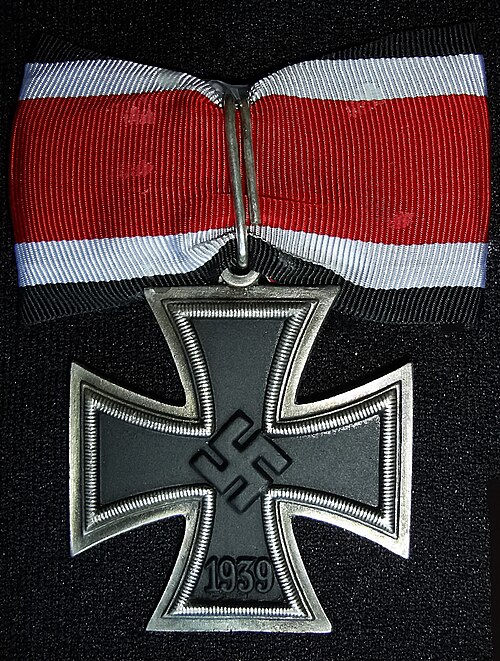
What makes this especially intriguing is the historical trajectory that follows.
The Teutonic Knights would become one of the great military-religious orders of medieval Europe. Their emblem was the black cross, a symbol which centuries later would influence the design of the Prussian Iron Cross. The Iron Cross would subsequently become one of the most recognizable military symbols in German history, appearing during the German Empire, the First World War, and later under Hitler's regime.
What I found particularly interesting was encountering Athanasius Kircher centuries later. Kircher, a Jesuit scholar writing with papal approval, dedicated one of his works to Ferdinand III.
In my own translation of that dedication, Ferdinand is described not only as Holy Roman Emperor but also as Grand Master of the Teutonic Knights. Even more strikingly, Kircher repeatedly addresses him as "Caesar."
This raises a question that I cannot help asking.
What does Caesar have to do with Christ?
Throughout later ecclesiastical history one increasingly encounters the language of empire, throne, dominion, sacred kingship, military orders, and imperial succession.
The connection becomes even more fascinating when one considers that Ferdinand III was Archduke of Austria, elected King of the Romans in 1636 as heir to the imperial throne, and referred to by Kircher as Caesar. Centuries later another Austrian, Adolf Hitler, would emerge from the same broad Germanic imperial world in which the Iron Cross and imperial symbolism continued to carry enormous cultural weight.
Daniel's vision describes a final kingdom characterized by iron mixed with clay (Daniel 2:41-43). Whatever one's interpretation of that prophecy may be, the symbolism of iron, empire, and divided authority remains striking. It is difficult not to notice such themes appearing repeatedly throughout European history.
Perhaps none of these observations individually prove anything. Yet taken together they raise questions.
"The kings of the Gentiles exercise lordship over them ... but ye shall not be so" (Luke 22:25-26).
"And I saw the beast, and the kings of the earth, and their armies, gathered together to make war against him that sat on the horse, and against his army."
— Book of Revelation 19:19 (KJV)
It is also worth remembering that many of the so-called "barbarian" peoples who overran and eventually replaced large portions of the Western Roman Empire were Germanic tribes such as the Visigoths, Ostrogoths, Vandals, Franks, Lombards, and Saxons. Prior to their conversion to Christianity, these peoples followed their own pagan religions and worshipped deities such as Odin (Woden), Thor (Donar), Tyr, and Freyr.
While these gods were not identical to the deities of Mesopotamia, Egypt, or Canaan, historians have long observed striking parallels among many ancient pagan religions. Storm gods, warrior gods, sacred kingship, divine councils, and cosmic battles appear repeatedly across the ancient world. The names change from culture to culture, yet similar religious patterns often remain. Thus, while Bel of Babylon and Thor of the Germanic world were not the same deity, both occupied prominent places within their respective pagan systems and reflected recurring themes of divine power, protection, kingship, and cosmic struggle. Whether in Mesopotamia, Canaan, Greece, Rome, or the Germanic north, humanity repeatedly produced different versions of similar religious structures, even when the gods themselves bore different names.
It is also striking that the Nazi regime not only advanced theories of Aryan racial superiority but was also deeply influenced by various occult, mystical, and esoteric ideas that sought to connect Germany's future with an imagined ancient past.
What makes this historically significant is that the world which succeeded Rome was not built solely from biblical Christianity. It emerged from a complex fusion of Roman imperial traditions, Germanic tribal cultures, military orders, political alliances, and ecclesiastical institutions. As the centuries progressed, these influences became increasingly intertwined within the structure of medieval Christendom.
This raises an important question. When we encounter later language of empire, sacred kingship, military orders, Caesars, and centralized authority, are we seeing the continuation of the simple apostolic faith found in the New Testament, or are we witnessing the gradual merging of Christianity with older imperial and cultural traditions inherited from both Rome and the peoples who came after it?


Comments